Why FAQ Schema Is Dead: What Google Actually Wants in 2026
30/06/2026
Start Listening
Why FAQ Schema Is Dead: What Google Actually Wants in 2026
For years, SEO professionals treated FAQ schema as a simple way to improve visibility in search results. Add structured markup, answer a few common questions, and hope Google rewarded your page with rich results.
That strategy worked—for a while.
Today, search looks completely different. Google's AI-generated responses, conversational search experiences, and entity-based understanding have transformed how information is discovered. Instead of rewarding pages simply because they include structured markup, Google increasingly rewards pages that genuinely help users solve problems.
If you're still relying on FAQ sections as your primary optimization strategy, you're optimizing for yesterday's search engine.
The conversation has shifted from FAQ schema SEO to understanding entities, topical authority, user intent, and high-quality answers that AI can confidently reference.
At Bestow, we've been helping brands adapt to this new reality through AI-first SEO strategies that prepare businesses for Google's evolving search ecosystem.
Connect with us
Why Everyone Suddenly Says "FAQ Schema Is Dead"
Let's be clear.
The statement "FAQ schema dead" doesn't mean Google stopped supporting structured data overnight.
Instead, Google fundamentally changed how much importance it gives FAQ-rich results.
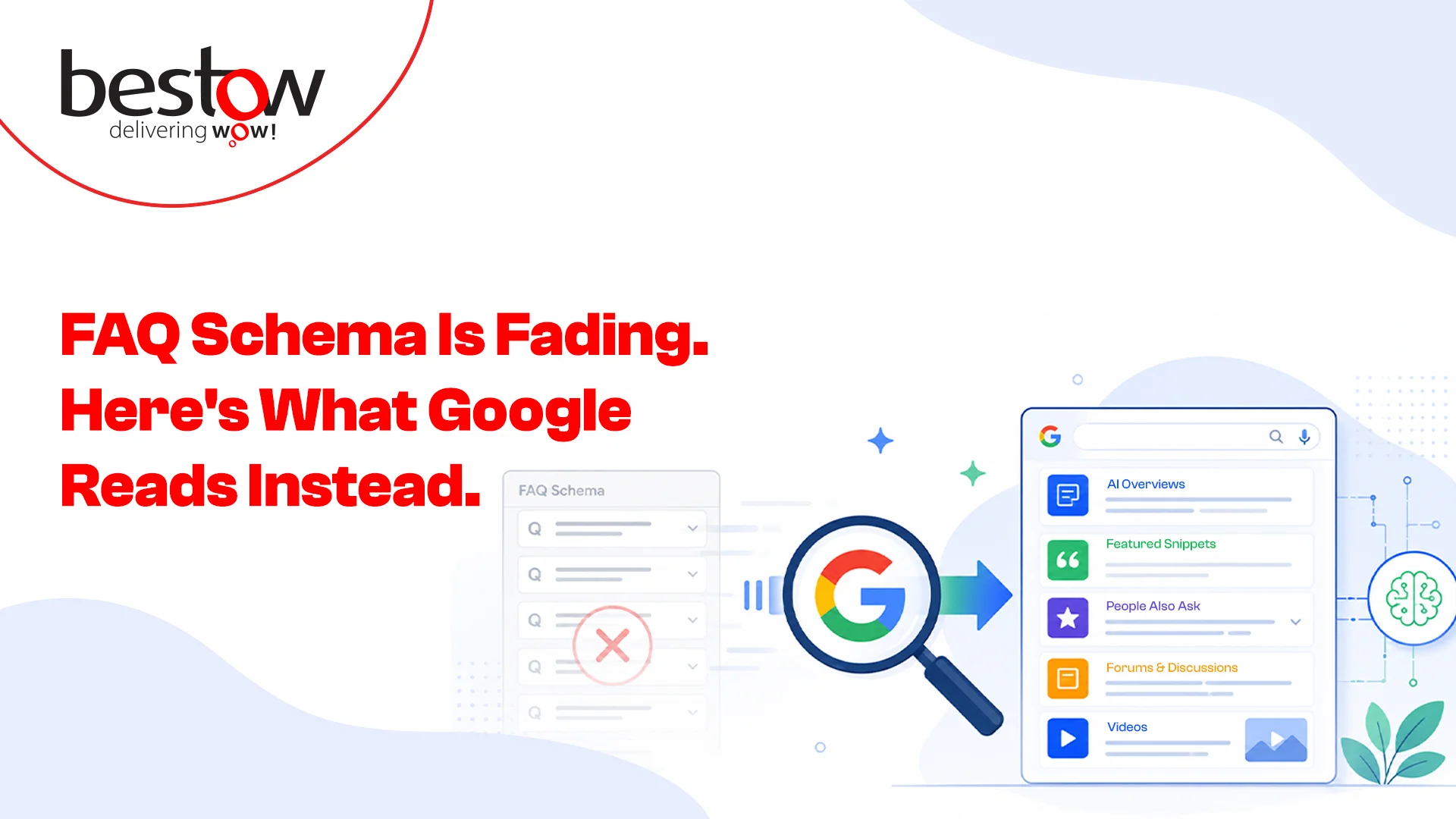
Over the past few years, Google significantly reduced the visibility of FAQ rich snippets across most websites. Today, these enhanced search results primarily appear for a limited group of trusted government and health-related domains.
Google's Search Engine Thinks More Like a Human Than Ever Before
Search engines no longer read pages the way they did five years ago.
Instead of simply matching keywords and structured data, Google now evaluates relationships between topics, entities, context, expertise, and user satisfaction.
Imagine someone searches:
"Should I remove FAQ schema from my website?"
Google doesn't just search for a page with identical wording.
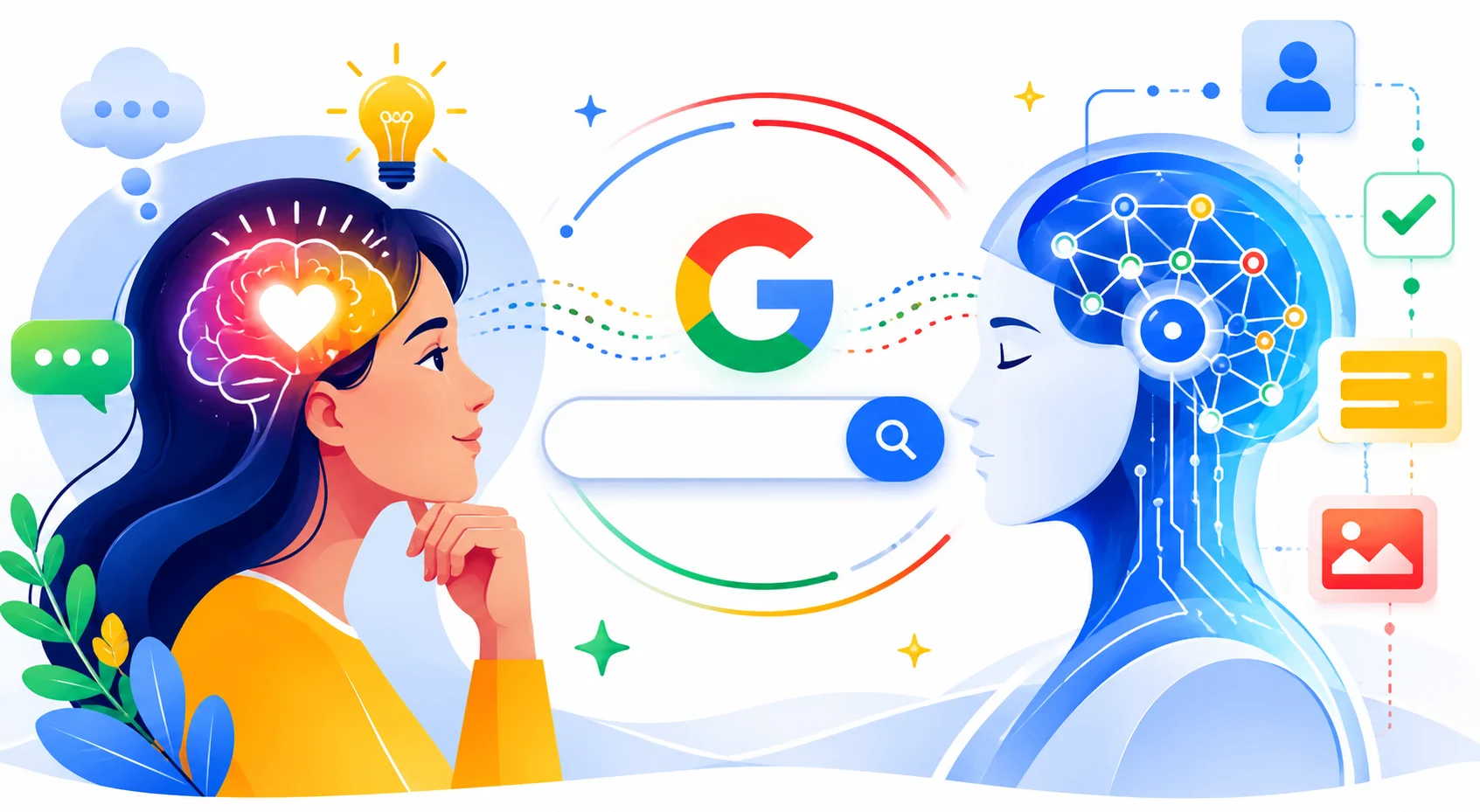
Instead, it understands concepts like:
Structured data
Search visibility
Schema markup
Technical SEO
AI-generated answers
Website optimization
These concepts are connected as entities.
That is why entity SEO has become one of the most important components of modern optimization.
Instead of asking:
"Does this page contain FAQ markup?"
Google increasingly asks:
"Is this page the most trustworthy resource for answering this question?"
That difference changes everything.
What Replaced FAQ Schema in 2026?
If FAQ schema is no longer the competitive advantage it once was, what should marketers focus on instead?
The answer lies in building content that search engines can confidently understand, connect, and cite.
Rather than publishing a list of disconnected questions, successful brands now create topic clusters that answer an entire subject comprehensively. Every section builds context, introduces related entities, and naturally addresses the follow-up questions users are likely to ask.
For example, instead of creating a page with ten FAQ blocks about AI SEO, a stronger approach is to publish an in-depth guide that explains:
What AI SEO is
Why Google changed its ranking systems
How AI search differs from traditional search
Common implementation mistakes
Actionable optimization strategies
This type of content aligns with how Google's AI systems process information today.
If you're looking to prepare your website for AI-driven search, our guide on How to Optimize Content for AI Search explains practical strategies that go far beyond traditional SEO.
Think in Topics, Not Templates
Many websites still follow an outdated formula:
Keyword → H2 → FAQ → Schema → Publish.
That workflow no longer reflects how search works.
Today's winning strategy looks more like this:
Search Intent → Entity Mapping → Topic Authority → User Experience → AI Visibility
Google wants to understand how well your content covers an entire subject—not how many keywords or FAQ blocks you've added.
For instance, if you're writing about Generative Engine Optimization (GEO), your content should naturally discuss AI search, entities, semantic relationships, user intent, citations, and content quality. These interconnected ideas strengthen topical authority and help search engines recognize your expertise.
Want to understand why this shift matters? Read our guide on GEO Is the New SEO.
What an AI-Friendly Content Structure Looks Like
In 2026, high-performing content typically follows a predictable pattern—not because of templates, but because it matches how users and AI consume information.
A strong page generally includes:
A clear answer near the beginning
Logical headings that build on one another
Real-world examples and practical insights
Supporting statistics where relevant
Internal links that strengthen topical authority
A concise summary with actionable next steps
Instead of forcing dozens of FAQs at the bottom, the answers are woven naturally into the article. This creates a smoother reading experience while giving Google's AI richer context to understand the page.
Why Entity SEO Is Becoming the Future of Search
Google has evolved from indexing pages to understanding knowledge.
Every page is now evaluated based on the relationships between concepts, brands, people, products, locations, and topics.
That's why entity SEO is becoming far more valuable than simply optimizing for keywords.
Imagine two articles discussing "AI-powered SEO."
The first repeats the keyword multiple times and ends with ten FAQs.
The second explains how AI-powered SEO connects with semantic search, Google's Knowledge Graph, AI Overviews, search intent, content quality, structured data, and user experience.
Which one demonstrates deeper expertise?
Google increasingly prefers the second because it understands the relationships between concepts rather than relying on exact keyword matches.
Businesses that embrace this shift today will be significantly better positioned for future algorithm updates.

What Businesses Should Do Next
The decline of FAQ-rich results doesn't mean abandoning technical SEO. It means giving technical optimization the right role.
Schema still helps search engines interpret your content. Fast-loading websites, clean architecture, and structured data remain important foundations. However, they work best when paired with authoritative, people-first content.
Here's what businesses should prioritize in 2026:
Write comprehensive resources instead of isolated FAQ pages.
Build topical authority around your core services.
Organically answer related user questions throughout the content.
Strengthen internal linking across relevant articles.
Focus on entities, expertise, and context rather than keyword density.
Create content that AI systems can confidently summarize and cite.
The brands gaining visibility today aren't simply optimizing pages—they're building knowledge ecosystems.
If you want to stay ahead of evolving search trends, don't miss our breakdown of Google Algorithm Updates 2026 for Marketers.
Beyond FAQ Schema: Build Content That AI Trusts
The debate isn't whether FAQ schema still works—it's whether your content deserves to be trusted.
Google's search ecosystem is becoming increasingly intelligent. AI-generated answers, entity recognition, semantic understanding, and user-first evaluation are replacing shortcuts that once dominated SEO.
Businesses that continue chasing outdated ranking tactics will struggle to stay visible. Those that invest in authoritative content, topical expertise, and AI-ready optimization will continue earning trust from both users and search engines.
At Bestow, we help businesses move beyond traditional SEO by creating strategies built for AI-first search. From entity-driven content planning to Generative Engine Optimization, we ensure your brand remains discoverable as search continues to evolve.
Talk to Our SEO Experts
FAQs
Not entirely. FAQ schema is still supported by Google, but its visibility in search results has been significantly reduced for most websites. Today, high-quality content and topical authority have a much greater impact on rankings than FAQ markup alone.
Yes, FAQ schema still helps search engines understand your page structure. However, it no longer guarantees rich results or higher rankings, making it a supporting optimization technique rather than a primary SEO strategy.
Nothing directly replaced FAQ schema, but Google's focus has shifted toward entity-based understanding, comprehensive content, semantic relevance, and AI-generated search experiences. Websites that provide complete, trustworthy answers are more likely to succeed.
Instead of placing answers only in an FAQ section, websites should integrate them naturally throughout the content. Clear headings, logical organization, examples, and contextual explanations help both users and AI search systems understand the topic better.
AI search favors content that demonstrates expertise, answers user intent comprehensively, covers related concepts, and builds topical authority. Original insights, accurate information, and well-connected entities increase the chances of being referenced.
No. If FAQ schema accurately represents your content, there's no need to remove it. Instead, treat it as a supporting technical element while investing more effort in creating valuable, in-depth content that satisfies user intent.
Google increasingly relies on entities, semantic relationships, user behavior, and contextual relevance to interpret webpages. Rather than matching keywords alone, it evaluates how thoroughly and accurately a page answers a topic and connects related concepts.
Categories
Recent Blogs
Send us a message
We'd love to hear from you
Let's build a plateform that works for you busines and the advertisers who trust it.
Talk to Our Expert