Creative That Converts: The Strategic Role of Design & Visual Storytelling in Modern Marketing
27/05/2026
Start Listening
Creative That Converts: The Strategic Role of Design & Visual Storytelling in Modern Marketing
Every day, people see thousands of marketing messages.
Most are ignored instantly.
Not because the products are bad.
Not because the offers are weak.
But because nothing emotionally connects.
In 2026, attention is no longer won through volume. It’s won through visual impact.
The brands growing fastest today understand something important:
People don’t just buy products.
They buy perception, emotion, and identity.
That’s why visual storytelling has become one of the most powerful forces in modern marketing.
From social media creatives and websites to advertisements and brand campaigns, design now directly influences:
Trust
Engagement
Brand recall
Conversion decisions
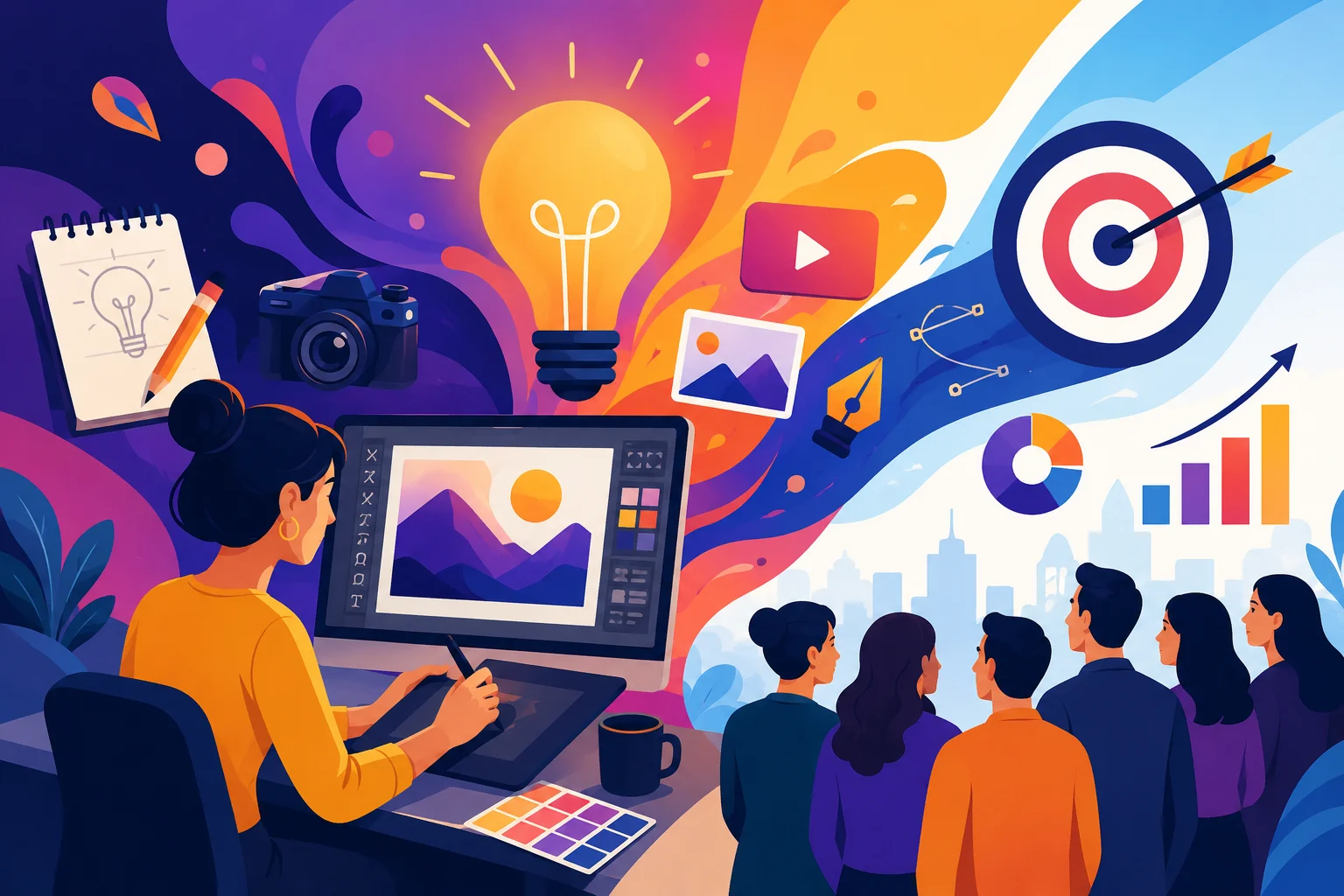
At Bestow, we see design not as decoration—but as strategy. Because the right creative doesn’t just make a brand look better. It makes a brand perform better.
In this blog, we’ll explore how visual storytelling, design psychology, and creative strategy are redefining marketing in 2026—and why brands that ignore this shift are already falling behind.
Want creative that doesn’t just look good, but actually converts?
Let’s build a stronger visual identity for your brand
Contact Bestow
Why Visual Storytelling Is No Longer Optional
The human brain processes visuals dramatically faster than text.
That’s why people often decide how they feel about a brand before they read a single sentence.
Visual storytelling works because humans remember emotions more than information.
When brands combine:
Design
Narrative
Emotion
Consistency
They create experiences that stay memorable.
This is why visual-first brands consistently outperform brands relying only on information-heavy marketing.
Today, visuals influence:
Engagement rates
Social sharing
Website retention
Conversion behavior
The takeaway is simple:
Design is no longer aesthetic support.
It’s business strategy.
The Psychology Behind Design That Converts
Good design influences decisions before users consciously realize it.
This is where design psychology becomes powerful.
Every visual choice sends a signal:
Colors create emotion
Typography creates perception
Layout creates trust
Structure creates clarity
For example:
Blue often communicates trust and stability
Red creates urgency and attention
Minimal layouts reduce friction and improve readability
Even white space plays a role in how users process information.
The brands that understand this don’t just “look professional.”
They feel intuitive.
And intuitive brands convert better.
Consistency Is What Builds Brand Trust
Most brands focus heavily on creating content.
Very few focus on creating consistency.
But consistency is what makes a brand recognizable.
When users see:
Different fonts
Different styles
Different tones
Different visual identities
across platforms, trust weakens.
Strong visual branding creates familiarity.
And familiarity creates confidence.
This consistency should extend across:
Social media
Website design
Ad creatives
Email campaigns
Packaging
Video content
Because every touchpoint shapes perception.
Why Emotion Is the Core of Brand Storytelling
People rarely remember marketing facts.
They remember how brands made them feel.
That’s why brand storytelling matters.
The best-performing brand stories usually include:
A relatable problem
Emotional tension
Transformation or resolution
And importantly:
The customer—not the brand—is the hero.
Great storytelling positions the brand as the guide helping users achieve transformation.
This emotional connection is what separates forgettable marketing from memorable brands.
Explore emotional storytelling strategies in this guide that talks about brand storytelling with emotion.

Creative Strategy Must Align With Business Goals
Good creative without strategy becomes noise.
Strong creative marketing strategy aligns visuals with business objectives.
Different stages of the customer journey require different creative approaches:
Awareness
Goal: Capture attention
Strategy: Bold visuals, movement, emotional hooks
Consideration
Goal: Build trust
Strategy: Testimonials, brand consistency, educational visuals
Conversion
Goal: Drive action
Strategy: Strong CTAs, urgency, clarity, proof
Retention
Goal: Build loyalty
Strategy: Community-focused content, behind-the-scenes storytelling
Brands that adapt their visual communication to each stage consistently outperform generic one-size-fits-all creative.
Why Modern Brands Need Motion & Dynamic Content
Static design alone is no longer enough.
Short-form videos, motion graphics, animations, and interactive visuals dominate modern attention spans.
Why?
Because movement naturally attracts human focus.
This is why:
Reels outperform many static posts
Motion ads improve engagement
Video storytelling increases retention
Visual storytelling today is becoming increasingly dynamic.
Brands that ignore video-first communication are already losing visibility.
How Brands Can Improve Their Visual Storytelling
You don’t need massive production budgets.
You need intentional creative systems.
Here’s how brands can improve:
1. Build a Clear Visual Identity
Define:
Colors
Typography
Image style
Layout rules
Design hierarchy
Document everything.
2. Lead With Emotion
People engage emotionally first and logically second.
Hook attention through feeling.
Then support it with information.
3. Use Real Stories & Real People
Authenticity consistently outperforms overly polished corporate visuals.
Relatable content builds stronger trust.
4. Design for Each Platform
A LinkedIn creative should not look identical to an Instagram Reel.
Every platform has different user behavior.
5. Test Creative Like You Test Ads
Creative should evolve using:
Engagement data
Retention metrics
Conversion insights
Design decisions should be informed—not assumed.
Learn how to increase brand engagement and how engagement-focused branding works.
The Rise of Strategic Creative in 2026
The brands dominating today are not just “creative.”
They are strategically creative.
This means:
Every design has a purpose
Every visual supports positioning
Every campaign reinforces identity
Modern branding is no longer just about aesthetics.
It’s about perception engineering.
And as AI-generated content increases online, human-centered storytelling and emotionally intelligent design will become even more valuable.
Why Bestow Sees Design as a Growth Asset
At Bestow, we believe creative should do more than attract attention.
It should:
Build recognition
Create emotional connection
Strengthen positioning
Improve conversions
From brand identity systems to campaign storytelling, our focus is on helping brands communicate visually in ways people actually remember.
Because the brands winning in 2026 are not just visible.
They’re unforgettable.
Ready to build a brand that people remember—and respond to? Connect with Bestow and turn your brand into a visual growth engine.
Ready to build a brand that people remember—and respond to? Connect with Bestow and turn your brand into a visual growth engine.
Connect with Bestow
FAQs
Visual storytelling is the use of design, images, videos, and creative elements to communicate a brand message emotionally and effectively. It helps brands capture attention faster and create stronger audience recall.
Consumers today are exposed to massive amounts of content daily, making attention harder to earn. Strong visual storytelling helps brands stand out, communicate quickly, and create emotional connections that improve engagement and conversions.
Design affects how people perceive trust, quality, and professionalism. Elements like colors, typography, layout, and visual hierarchy influence decisions even before users consciously process the content.
Yes. Strong visual branding helps small businesses appear more professional, memorable, and trustworthy. Even simple, consistent design systems can significantly improve audience perception and brand recall.
A successful creative campaign combines emotional storytelling, strong visuals, clear messaging, and strategic positioning. The best campaigns are not just visually attractive—they also align with business goals and audience behavior.
Brands should evolve their visual identity periodically to stay relevant, especially when audience behavior, platforms, or market positioning changes. However, the core brand identity should remain recognizable and consistent.
Consistency builds familiarity and trust across platforms. When a brand maintains the same visual language, tone, and design style everywhere, audiences recognize and remember it more easily.
Categories
Recent Blogs
Send us a message
We'd love to hear from you
Let's build a plateform that works for you busines and the advertisers who trust it.
Talk to Our Expert