Search, Social & AI Are Merging Faster Than Brands Realize
27/10/2026
Start Listening
Search, Social & AI Are Merging Faster Than Brands Realize
A few years ago, digital discovery was fairly predictable.
Want an answer? Google it. Want entertainment? Open Instagram or TikTok. Want advice? Ask friends or read reviews.
That separation is disappearing.
People now discover restaurants through Reels, search for product reviews on social platforms, ask AI assistants to compare brands, use images to find products, and receive AI-generated answers directly inside traditional search engines. TikTok itself reported in 2025 that billions of searches were taking place on its platform every day, up more than 40% year over year. Meanwhile, Google continues to make its Search experience increasingly conversational through AI Overviews and AI Mode.
The convergence of search, social and AI is creating a discovery ecosystem where the platform matters less than the user's intention.
And that changes almost everything marketers have learned about being found online.
Discovery is no longer happening in one place, so your marketing cannot afford to operate in silos. Explore how Bestow helps brands build connected digital experiences across search, social and AI, or connect with our team to start building your next-stage visibility strategy.
Get in touch with the usSearch Is Becoming Social, and Social Is Becoming Search
The old search vs social debate assumed the two channels served different purposes.
Search captured intent. Social created awareness.
Not anymore.
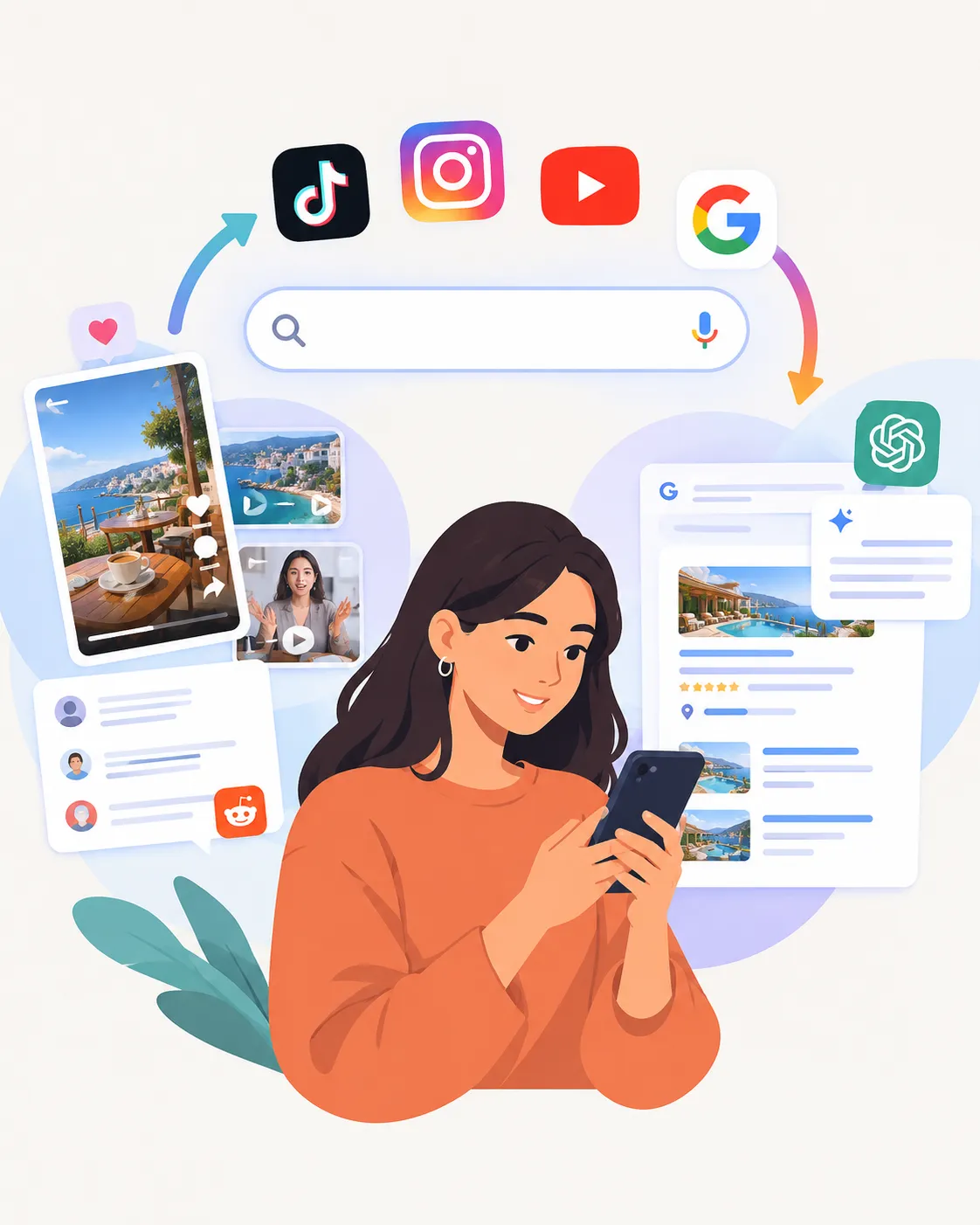
Someone planning a trip might search Instagram for cafés, YouTube for itineraries and Google for hotels. Someone considering a skincare product might discover it through a Reel, search its name on social media, read Reddit discussions and eventually ask an AI assistant whether it suits their needs.
Platforms are responding accordingly. TikTok has introduced dedicated search advertising products and, in 2026, announced Search Hubs designed to place brand-owned pages prominently within search results.
This is search and social merging in real time.
Social platforms are becoming content discovery platforms, while search engines are increasingly incorporating video, imagery, creator perspectives and conversational responses.
For marketers, social search means captions, spoken words, titles, descriptions, comments and video topics all contribute to discoverability.
That is also why short-form video marketing is becoming a serious discovery channel, rather than simply an engagement tactic.
AI Is Becoming the Layer Between Intent and Discovery
Now add AI to the equation.
Traditionally, search worked something like this:
Query → Results → Click → Website → Answer
Increasingly, the journey looks like:
Question → AI-generated answer → Recommendation → Decision
Google says AI Mode has surpassed one billion monthly users globally, while AI Overviews has more than 2.5 billion monthly active users.
That makes AI search much more than another channel marketers need to monitor. AI is becoming an interpretation layer between what someone wants and what they eventually discover.
Instead of typing several short queries, users can ask detailed questions, compare options and continue with follow-ups. Google's AI Mode, for example, is designed around conversational and multimodal searching rather than isolated keyword queries.
For brands, this creates a new challenge: ranking is valuable, but being understood, referenced and recommended is becoming equally important.
Our guide to why GEO is becoming an extension of SEO explains how brands can prepare content for this environment.
Indian businesses should also understand how Google AI Mode is changing search behaviour as conversational search becomes mainstream.
Discovery Is Becoming Omnichannel
Imagine someone wants to buy a new coffee machine.
They might:
See one in an Instagram Reel.
Search YouTube for demonstrations.
Google the model.
Ask an AI tool to compare it with alternatives.
Check social comments for real customer opinions.
Return to Google to find the best place to buy it.
Which channel deserves credit?
All of them.
This omnichannel discovery journey makes traditional attribution increasingly incomplete. Search, social and AI continuously influence one another.
The future of digital marketing, therefore, is less about winning one platform and more about building a recognisable brand across the entire discovery journey.
Zero-Click Discovery Changes What “Visibility” Means
There is another important consequence of this convergence: discovery does not always produce a website visit.
A customer may learn everything they need from an Instagram carousel, AI response, Google AI Overview or video.
Google's evolving AI Search experience explicitly combines generated answers with web links and follow-up conversations.
This makes zero-click search an important part of modern marketing.
As we explain in Bestow's guide to winning when searches don't result in website clicks, visibility can influence a buying decision even when analytics never record a session.
Brands should therefore look beyond traffic and monitor signals such as branded searches, mentions, video views, saves, AI citations, direct traffic, engagement and assisted conversions.
Content Must Now Be Discoverable in Multiple Formats
If discovery happens everywhere, one piece of content should not exist in only one format.
Consider a detailed article about choosing solar panels.
Its core insights could become:
A Google-optimised article.
An Instagram carousel.
A 30-second Reel.
A YouTube Short.
An FAQ section designed around conversational questions.
A structured explanation that answer engines can interpret.
The information remains consistent, but its presentation changes with the discovery environment.
This is why brands should stop treating SEO content, social content and AI-ready content as completely separate production pipelines.
A better unified marketing strategy starts with audience questions and intent signals, then creates useful answers that can be adapted across channels.
Bestow's guide to voice and visual search demonstrates how discovery is already moving beyond typed keywords into images, cameras and conversational queries.
AI Is Also Changing How Marketing Gets Executed
AI is not only changing where consumers search. It is changing how marketers respond.
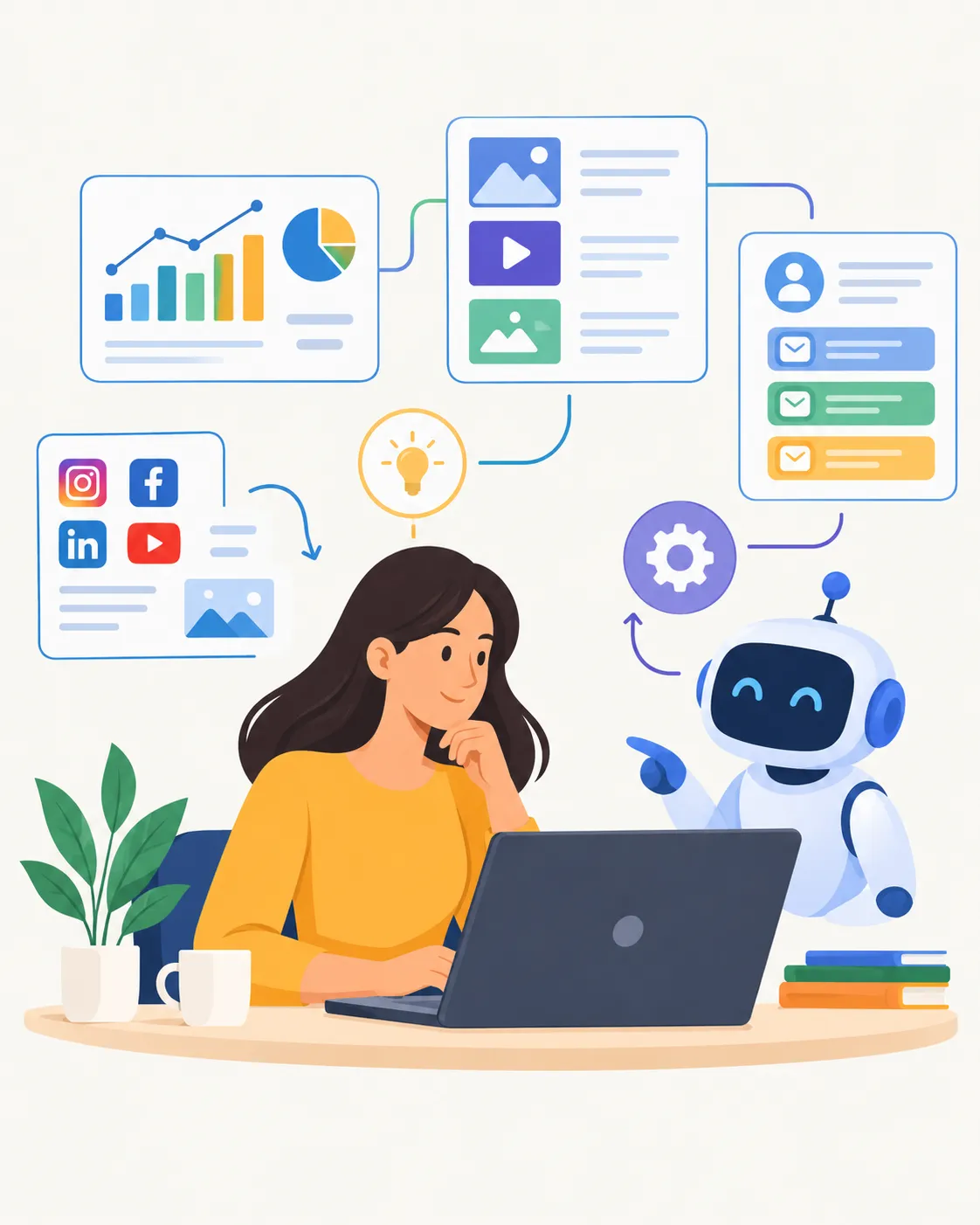
Generative AI can help teams analyse audience behaviour, identify topics, repurpose assets, personalise messaging and react faster to algorithm changes.
That does not mean automating everything.
It means using technology to make a connected strategy faster and more responsive.
Our breakdown of how AI and automation are redefining digital marketing explores this operational shift in greater detail.
The New Goal: Be Findable, Understandable and Memorable
Brands used to ask:
“Are we ranking on Google?”
The better question now is:
“Can customers discover and trust us wherever they look?”
That requires three things:
Findability: Your brand needs visibility across relevant search engines, social platforms and AI experiences.
Understandability: Search engines and answer engines need clear information about who you are, what you offer and why you are credible.
Memorability: People must recognise your brand after encountering it across multiple platforms.
That is why traditional SEO still matters—but its role is expanding. AI-powered SEO can help brands build a stronger foundation for both conventional rankings and emerging AI-led discovery.
Stop Optimising Channels. Start Optimising Discovery.
The convergence of search, social and AI does not mean every platform has suddenly become identical.
It means their roles increasingly overlap.
Search engines recommend. Social platforms answer questions. AI tools search, compare and summarise. Videos rank. Images become queries. Comments influence purchasing decisions.
This means that brands that continue building disconnected strategies for every channel risk becoming visible in one place and invisible everywhere else.
The winners will build ecosystems where useful content, consistent brand authority and platform-native experiences reinforce one another.
Bestow helps brands connect those touchpoints into one growth-focused digital strategy. If you're ready to make your brand easier to discover wherever customers search next, get in touch with Bestow.
Connect with usFAQs
It means customers can discover brands through search engines, social feeds and AI answers during the same buying journey. Brands therefore need consistent visibility across all three.
Social platforms increasingly help users research products, places, ideas and recommendations, while search engines increasingly surface visual, creator-led and AI-generated content.
AI can interpret complex questions, summarise information and recommend relevant sources or options, reducing the need for users to manually browse multiple search results.
Yes. Users increasingly search social platforms for reviews, tutorials, recommendations and inspiration; TikTok has reported billions of searches occurring on its platform daily.
Build content around audience intent first, then adapt those insights into formats suitable for websites, search engines, social platforms, video and AI-driven discovery.
No. SEO remains an important foundation, but brands increasingly need to optimise for social discovery, multimodal search and AI-generated answers alongside traditional rankings.
Clear, original, useful content that directly answers real audience questions works best. Strong expertise can then be repurposed into articles, videos, FAQs, carousels and other platform-native formats.
Strengthen your website's authority, publish answer-focused original content, maintain consistent brand information and build visibility across the platforms where your audience researches and makes decisions.
Categories
Recent Blogs
Send us a message
We'd love to hear from you
Let's build a plateform that works for you busines and the advertisers who trust it.
Talk to Our Expert