Why Modern Consumers Trust Communities More Than Ads
02/11/2026
Start Listening
Why Modern Consumers Trust Communities More Than Ads
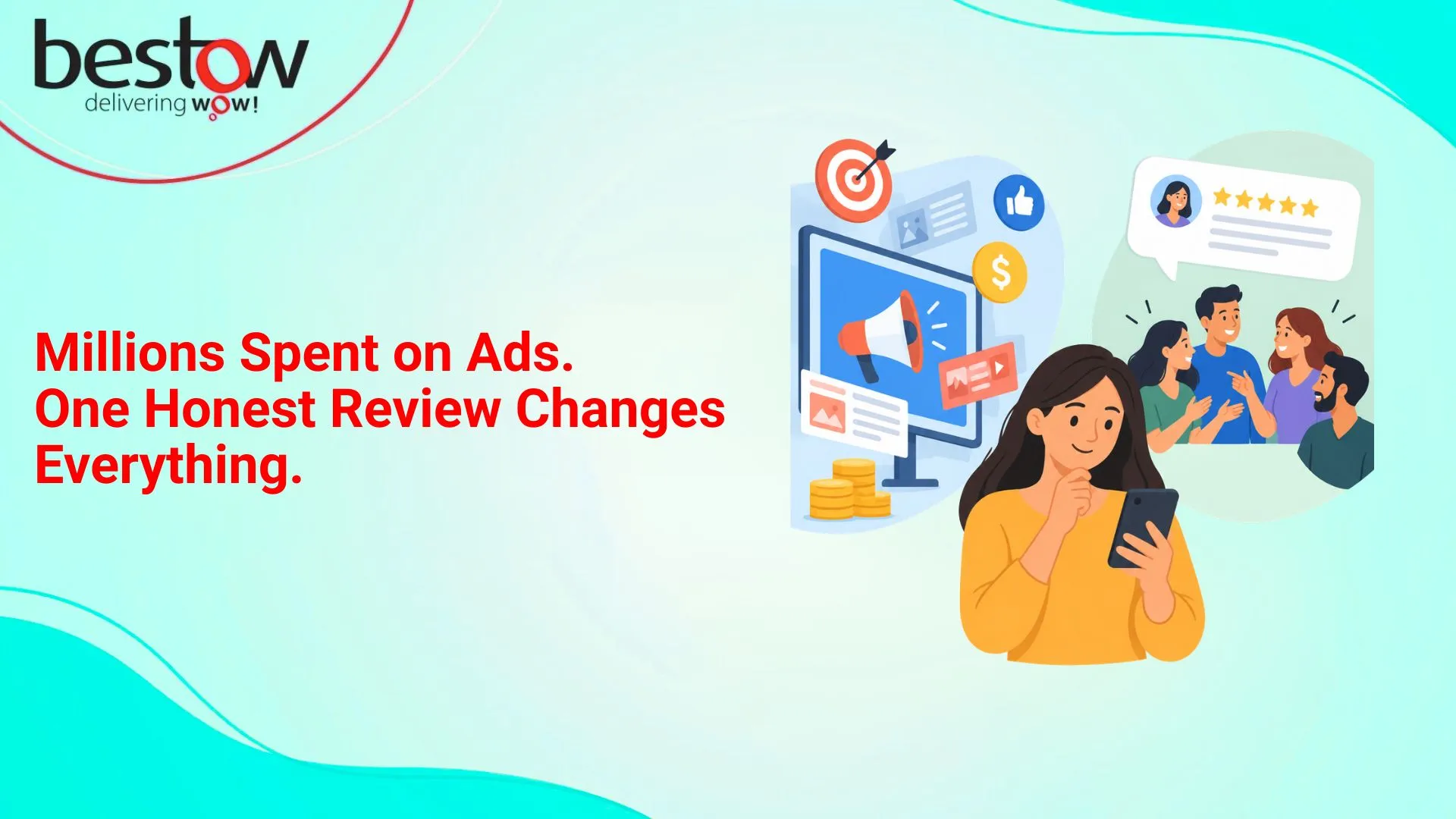
Think about your last major purchase. Did you immediately believe the advertisement, or did you check reviews, ask friends, watch customer videos, or browse Reddit discussions?
For many consumers, advertising creates awareness, but conversations help validate decisions.
The growing influence of Community-driven marketing reflects a fundamental change in consumer behaviour. People increasingly want to hear from those who have actually experienced a product rather than rely exclusively on promotional claims.
According to the 2025 Edelman Trust Barometer Special Report, 88% of respondents consider brand trust important or a deal-breaker when making purchasing decisions.
For businesses, this raises an important question: Are you investing enough in the people who influence your customers' decisions?
At Bestow, we combine brand strategy, creative storytelling, and digital marketing to help businesses build meaningful audience connections. Let's discuss your brand's growth strategy.
Get in touch with the usThe Consumer Trust Shift: Why Advertising Alone Isn't Enough
Traditional advertising operates through a straightforward model: brands create messages, distribute them, and encourage consumers to purchase.
However, today's consumers have access to independent opinions, product comparisons, and real customer experiences.
Three factors help explain why consumers trust communities more than ads.
1. Advertising Fatigue Is Changing Consumer Behaviour
Consumers encounter promotional messages across search engines, social platforms, websites, and streaming services.
This constant exposure contributes to ad fatigue, making audiences increasingly selective about the content they engage with.
An advertisement may successfully introduce a product, but repeated promotional messaging cannot automatically establish credibility.

2. Consumers Want Evidence, Not Just Promises
A brand might advertise exceptional customer service. However, a detailed customer review explaining how the company resolved an issue provides more tangible evidence.
This is where social proof marketing becomes influential.
According to BrightLocal's 2025 Local Consumer Review Survey, 74% of surveyed US consumers consult at least two review websites when researching local businesses.
Importantly, consumers evaluate review details rather than relying exclusively on star ratings.
3. Trust Is Becoming More Personal
Modern consumers increasingly evaluate brands through their values, responsiveness, and real-world behaviour.
Edelman's 2025 research found that 73% of respondents said their trust would increase if a brand authentically reflected contemporary culture.
This highlights why authenticity in marketing requires consistent action rather than carefully crafted messaging alone.
Why Communities Have Become Powerful Trust Builders
A strong brand community creates opportunities for customers to exchange experiences, solve problems, and develop relationships around shared interests.
Unlike traditional advertising, communities encourage multidirectional conversations.
Peer Recommendations Feel More Relevant
A recommendation from someone with similar needs often carries contextual value.
For example, a skincare customer may trust another person's detailed experience with a particular skin type more than a celebrity endorsement.
This makes peer recommendations and word-of-mouth marketing especially valuable during purchase consideration.
Real Customer Content Reduces Uncertainty
User-generated content allows potential buyers to observe products in everyday situations.
Examples include:
Customer unboxing videos demonstrating actual product experiences.
Before-and-after demonstrations showing realistic outcomes.
Customer testimonials addressing common purchase concerns.
Product discussions explaining advantages and limitations.
Businesses can explore how UGC improves engagement and sales by making authentic customer experiences part of their content strategy.
Communities Create Belonging Beyond Transactions
Successful online communities provide something beyond discounts and product announcements.
Members exchange knowledge, share experiences, and develop connections.
For brands, this creates opportunities to strengthen customer loyalty and encourage voluntary brand advocacy.
However, community trust depends on allowing genuine discussion, including constructive criticism.
The Research Behind Community-Led Consumer Behaviour
The growing importance of communities is supported by research into trust and customer decision-making.
Consider these findings:
| Research | Key Finding |
|---|---|
| Edelman, 2025 | 88% consider brand trust important or a deal-breaker when purchasing. |
| BrightLocal, 2025 | 42% of surveyed US consumers trust online reviews as much as personal recommendations. |
| Edelman, 2025 | 64% say they choose brands based on their beliefs. |
These findings demonstrate that trust is important, but also that consumers distinguish between anonymous reviews and personal recommendations.
For marketers, the implication is clear: Credibility must be earned through real experiences, not manufactured popularity.
How Brands Can Turn Communities Into Growth Engines
Building an engaged community requires more than creating a WhatsApp group or increasing Instagram followers.
It requires a clear purpose, consistent participation, and genuine customer value.
1. Encourage Customers to Share Their Experiences
Invite customers to publish honest reviews, tutorials, testimonials, and product demonstrations.
Avoid scripting positive feedback or incentivising misleading endorsements.
Brands can also explore how UGC and FOMO influence small-business growth while ensuring that customer experiences remain authentic.
2. Collaborate With Relevant Micro-Influencers
Smaller creators often serve specialised audiences connected through shared interests.
For example, a local fitness creator may offer more relevant product insights to a neighbourhood fitness community than a national celebrity.
The effectiveness of micro-influencers depends on audience relevance, credibility, and transparent partnerships.
For regional businesses, micro-influencer marketing for Gujarat SMEs offers useful strategic considerations.
3. Participate Where Customers Already Gather
Consumers discuss products across Instagram, LinkedIn, YouTube, niche forums, and Reddit & Discord communities.
Rather than immediately launching a branded group, businesses should identify existing conversations.
Effective participation involves:
Answering questions without unnecessary promotion.
Sharing practical advice and useful resources.
Acknowledging customer concerns transparently.
Encouraging conversations between members.
Listening to feedback before introducing offers.
The objective is to become a trusted participant, not dominate every discussion.
4. Prioritise Engagement Over Follower Counts
A large audience does not necessarily indicate an active community.
Brands should examine meaningful interactions, recurring participation, customer questions, and shared experiences.
For practical ideas, explore how to increase brand engagement through audience-focused content and conversations.

5. Build Professional Communities Through LinkedIn
For B2B businesses, LinkedIn offers opportunities to connect industry professionals through insights, discussions, and shared expertise.
Thought leadership, employee perspectives, and customer success stories can strengthen credibility.
A consistent LinkedIn brand growth strategy can help businesses establish authority while encouraging professional relationships.
Community Marketing vs Traditional Advertising: What Actually Works?
Community marketing and paid advertising serve different purposes.
| Traditional Advertising | Community Marketing |
|---|---|
| Primarily brand-controlled messaging | Member-led conversations |
| Useful for generating immediate reach | Useful for developing relationships |
| Often focused on campaign outcomes | Often focused on sustained participation |
| Performance measured through clicks and conversions | Performance includes retention, advocacy, and referrals |
Advertising can accelerate discovery, while communities can help customers evaluate whether a brand deserves their trust.
This shift also explains why community-led marketing is challenging traditional funnels.
Rather than viewing these approaches as competitors, businesses should integrate both into their marketing strategies.
How Can Businesses Measure Community Marketing ROI?
Community success should be measured through business outcomes, not vanity metrics.
Important indicators include:
Community engagement: Active participants, meaningful discussions, and repeat contributions.
Customer retention: Repeat purchases and long-term customer relationships.
Referral conversions: Purchases generated through member recommendations.
UGC participation: Customers voluntarily creating brand-related content.
Customer acquisition cost: Changes in acquisition efficiency as referrals increase.
Customer lifetime value: Revenue generated through sustained customer relationships.
Tracking referral links, customer surveys, and CRM attribution can help identify community-driven outcomes.
However, marketers should avoid attributing every conversion to the community without supporting evidence.
The Brands That Listen Will Earn the Trust
Modern consumers haven't stopped responding to advertising. They've simply become more selective about whose opinions influence their decisions.
Communities offer something advertisements cannot independently manufacture: relationships built through shared experiences.
The future of trust in advertising depends increasingly on whether promotional claims align with what customers actually experience.
For businesses, the opportunity is to transform satisfied customers into credible advocates while creating spaces where genuine conversations can thrive.
At Bestow, our strategic approach combines audience research, brand positioning, creative content, and social media marketing to help businesses create stronger customer connections.
Ready to build a brand people genuinely want to recommend?
Connect with our team and explore a marketing strategy built around trust, engagement, and sustainable growth.
Connect with usFAQs
Consumers often value communities because they provide real experiences, independent opinions, and practical recommendations that help validate advertising claims.
Community-driven marketing is a strategy that encourages customer participation, shared experiences, and ongoing conversations to build trust, advocacy, and long-term relationships.
A social media following primarily receives brand content, while a community encourages members to interact, exchange ideas, and develop relationships with one another.
Authentic customer content can strengthen credibility by demonstrating real experiences, although its effectiveness depends on transparency, relevance, and content quality.
Small businesses can begin by engaging existing customers, encouraging honest feedback, creating useful content, and facilitating conversations around shared interests.
Yes, influencers can support community marketing when they have credible relationships with relevant audiences and clearly disclose commercial partnerships.
Track referral conversions, repeat purchases, retention, customer lifetime value, and meaningful participation alongside community management costs.
Yes. Paid advertising can introduce new audiences to a brand, while community interactions help reinforce credibility, encourage consideration, and support long-term loyalty.
Categories
Recent Blogs
Send us a message
We'd love to hear from you
Let's build a plateform that works for you busines and the advertisers who trust it.
Talk to Our Expert