From SEO to GEO to Ads: How ChatGPT Is Reshaping the Marketing Funnel
08/10/2026
Start Listening
From SEO to GEO to Ads: How ChatGPT Is Reshaping the Marketing Funnel
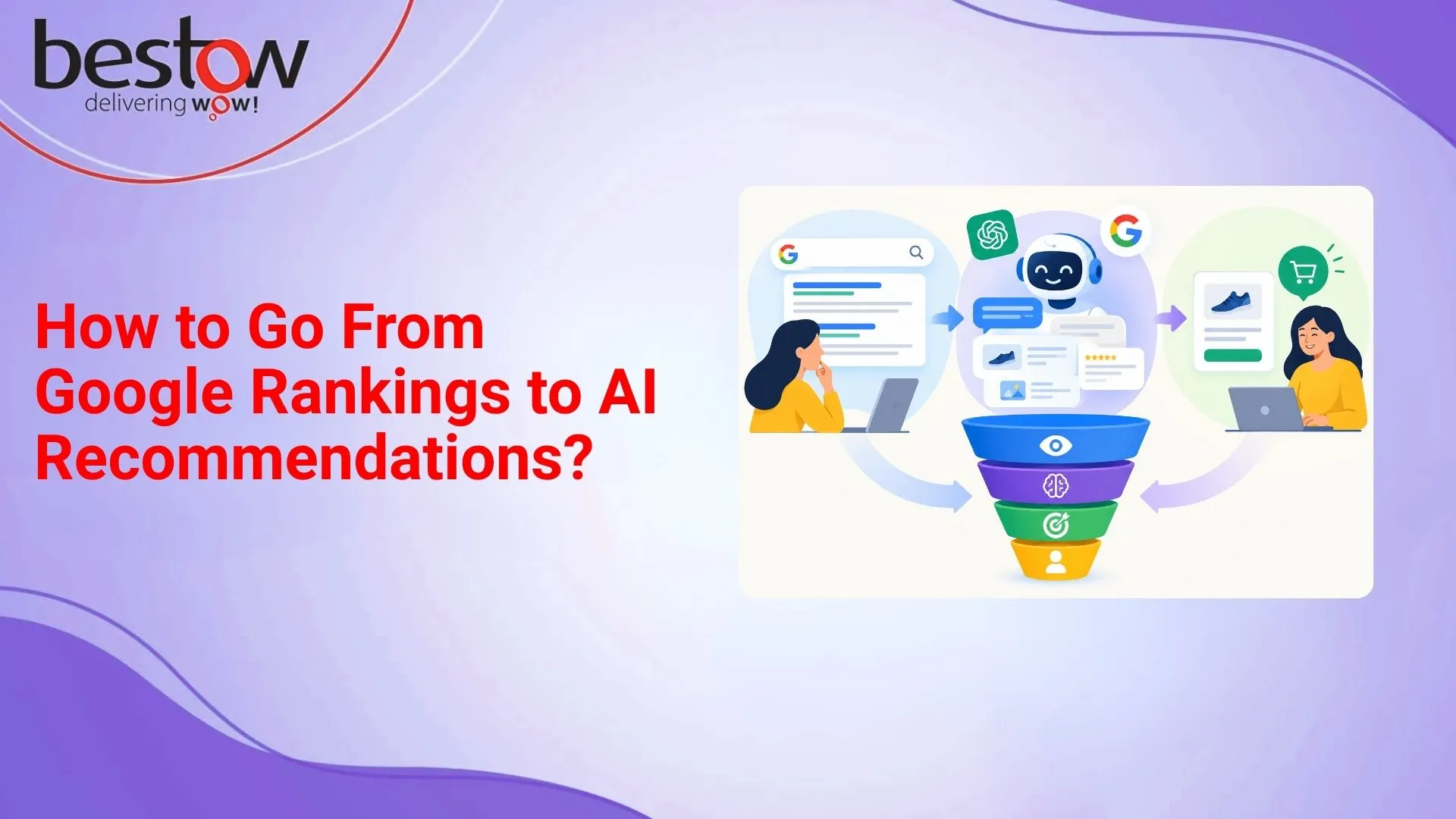
For years, the digital marketing funnel followed a familiar path: someone searched on Google, clicked a result, explored a website, compared options and eventually converted.
AI is making that journey far less linear.
People can now ask ChatGPT or Google’s AI-powered Search complex questions, compare products, research brands and continue asking follow-up questions without repeatedly starting new searches. Google has increasingly made Search conversational through AI Overviews and AI Mode, while ChatGPT has expanded from information discovery into shopping and advertising experiences.
The result is a new ChatGPT marketing funnel in which discovery, consideration and even commercial action can happen within an AI conversation.
For marketers, the question is no longer simply, “Are we ranking?” It is becoming, “Can AI understand us, cite us, recommend us and connect us with a customer at the right moment?”
The funnel is changing, but your brand does not have to play catch-up.
Explore how Bestow can help you build visibility across search, AI discovery and performance channels or get in touch with Bestow to start planning your AI-ready marketing strategy.
Get in touch with the usThe Traditional Marketing Funnel Is Being Compressed
Traditional digital funnels separated awareness, consideration and conversion into relatively distinct channels.
SEO attracted organic discovery. Content educated prospects. Retargeting brought them back. Paid advertising captured commercial intent. Landing pages and sales teams handled conversion.
AI can compress several of these interactions into one interface.
A potential buyer might ask an AI assistant:
“What are the best CRM tools for a 20-person sales team?”
Then: “Which ones integrate with HubSpot?”
Then: “Compare the top three by price.”
Then: “Which one is easiest to implement?”
Instead of conducting four independent searches and visiting numerous pages, the person can continue one conversation.
This AI-powered customer journey makes top-of-funnel AI discovery increasingly connected with consideration and purchase intent. That is why brands need an AI search marketing strategy covering more than rankings.
Stage 1: SEO Still Creates the Foundation
The rise of generative AI does not make traditional search irrelevant. Google itself reports massive usage of AI Overviews and AI Mode while continuing to connect users with web sources.
SEO therefore remains fundamental.
Technical accessibility, useful content, topical authority, backlinks, structured data and strong brand entities can all contribute to how information about a business is discovered and understood online.
The difference is that marketers now need to think beyond the blue link.
Bestow’s AI-powered SEO approach reflects this broader search environment, where content must serve users while remaining understandable across evolving discovery platforms.
The SEO to GEO transition is therefore better understood as an expansion of search strategy—not the abandonment of SEO.
For a deeper comparison of these disciplines, read Bestow’s guide to ranking across ChatGPT, Perplexity and Google AI.
Stage 2: GEO Makes Content Easier to Discover and Cite
Generative Engine Optimization (GEO) focuses on making a brand’s information clear, authoritative and useful enough to be surfaced or referenced within generative AI experiences.
That changes the goal.
Instead of optimizing only for “position #1,” marketers increasingly care about AI citations and brand visibility.
Useful GEO practices include clear definitions, original expertise, verifiable claims, strong entity signals, descriptive headings, FAQs and concise passages that answer specific questions.
Bestow’s guide on why GEO is changing search visibility explains this shift, while its article on how GEO will change SEO in India explores what it means for Indian businesses.
Brands that want a dedicated strategy can also explore Bestow’s GEO services.
Stage 3: AEO Helps You Become the Answer
AI Answer Engine Optimization (AEO) is closely related to GEO, but the emphasis is on answering user questions directly and clearly.
Think about the difference between writing a generic 2,000-word article and creating a page where important questions have concise, self-contained answers backed by useful detail.
The latter is easier for both people and machines to navigate.
Good content structuring for LLMs therefore means using logical headings, direct definitions, comparisons, FAQs, statistics with sources and clearly identifiable entities.
It also fits the growth of zero-click search, where the user may receive enough information from an AI-generated answer without visiting every source.
Bestow’s guide to winning in a zero-click marketing environment explores how brands can adapt when visibility does not always produce an immediate website session.
Stage 4: AI Citations Become a New Discovery Touchpoint
Imagine someone asking ChatGPT for the best solution to a business problem and seeing your company mentioned as one of the relevant options.
That mention may become a brand touchpoint before the user ever sees your homepage.
This makes authority increasingly important across the web—not just on your own domain.
Consistent brand information, expert content, trustworthy third-party references, strong topical coverage and entity SEO can help AI systems understand what a company represents.
There is no guaranteed formula for earning an AI citation, but brands can improve how understandable and reference-worthy their content is.
For practical tactics, see Bestow’s guide on getting your brand cited by ChatGPT, Perplexity and Google AI.
Stage 5: ChatGPT Ads Bring Paid Media Into the Conversation
The funnel becomes even more interesting when paid discovery enters conversational AI.
ChatGPT ads for business are now a real advertising channel. OpenAI offers an Ads Manager where advertisers can create campaigns, set budgets and goals, and measure performance. Ads are clearly labeled and kept separate from ChatGPT’s answers.
This matters because conversational intent can provide richer context than a short keyword.
Someone may not simply search “accounting software.” They might explain that they run a 15-person company, use a particular CRM, need automated invoicing and have a defined budget.
That creates a different opportunity for paid media.
For marketers, performance marketing or ads may therefore increasingly extend beyond conventional search and social advertising into AI-native environments. Explore Bestow’s performance marketing services to understand how paid channels can fit into a wider conversion strategy.
Stage 6: ChatGPT Shopping Brings Discovery Closer to Purchase
AI is also shortening the distance between product research and transactions.
OpenAI introduced Instant Checkout in 2025, enabling eligible users and merchants to move from product discovery toward purchasing within ChatGPT.
That makes ChatGPT shopping and ads particularly important for commerce marketers.
A customer journey could increasingly look like:
Ask → discover → compare → evaluate → act
without the constant platform switching associated with traditional ecommerce research.
This is the foundation of conversational commerce marketing: buying journeys built around dialogue rather than menus, filters and isolated search queries.
What the New AI Marketing Funnel Looks Like
Instead of viewing SEO, GEO and advertising as separate strategies, marketers can think about the funnel as interconnected layers:
SEO → Discoverability: Make your website technically accessible, useful and authoritative.
GEO/AEO → AI Visibility: Structure information so AI systems can understand, retrieve and potentially cite it.
AI Conversations → Consideration: Provide enough authoritative information for users researching and comparing solutions.
AI Ads → Paid Discovery: Reach relevant audiences during conversational exploration and decision-making.
Conversational Commerce → Conversion: Reduce friction between recommendation, product evaluation and action.
The AI Overviews impact on marketing funnel follows a similar pattern. Google is increasingly allowing users to move from an AI Overview into follow-up conversations while continuing to provide links to the web.
Bestow explores this changing environment further in its guide to the future of SEO after AI Overviews.
What Should Marketers Do Now?
Do not abandon SEO for GEO or replace organic marketing with AI ads.
Build them together.
Maintain strong technical and traditional SEO foundations. Create answer-first content. Strengthen brand entities and topical authority. Publish original insights that are worth referencing. Monitor AI citations alongside rankings. Test emerging paid channels where they fit your audience and objectives.
And importantly, treat AI as a conversation rather than another keyword box.
Bestow’s guide to using ChatGPT for lead generation shows how conversational AI can extend beyond discovery into lead nurturing and customer engagement.
From Search Funnel to Conversation Funnel
Marketing is moving from a sequence of isolated clicks toward connected conversations.
SEO helps brands remain discoverable. GEO and AEO make information easier for AI systems to understand and surface. AI citations create new visibility opportunities. Conversational advertising introduces paid reach closer to decision-making. Commerce integrations can shorten the journey from question to transaction.
The brands adapting fastest will not necessarily abandon their existing marketing funnel. They will redesign it for a world where search engines, answer engines, AI assistants, advertising and commerce increasingly overlap.
Your customers are already discovering brands in new ways.
Explore Bestow to build a strategy that connects SEO, GEO, AI visibility and paid growth or talk to the Bestow team about preparing your funnel for AI-led discovery and conversion.
Connect with usFAQs
SEO primarily improves visibility in traditional search results, while GEO focuses on making information understandable and potentially citable within generative AI answers. They increasingly work together.
ChatGPT can bring discovery, research, comparison and commercial action into a conversational environment, reducing the boundaries between funnel stages.
Yes. OpenAI currently provides ChatGPT Ads and an Ads Manager for eligible advertisers and markets, with ads displayed separately from ChatGPT answers.
AEO focuses on structuring content to answer questions clearly, while GEO has a broader focus on visibility and citations within generative AI experiences.
There is no guaranteed method. Brands can improve their chances by publishing authoritative, clearly structured, source-backed content and strengthening their overall online authority and entity signals.
GEO works alongside SEO. Traditional search remains important, while GEO expands optimization toward AI-generated discovery and answers.
Use descriptive headings, concise answers, credible sources, original insights, clear entities, structured data where appropriate, comparisons and useful FAQs.
Track AI citations and mentions, branded search demand, referral traffic from AI platforms, search visibility, assisted conversions and leads alongside traditional SEO metrics.
Categories
Recent Blogs
Send us a message
We'd love to hear from you
Let's build a plateform that works for you busines and the advertisers who trust it.
Talk to Our Expert