Festive Campaign Planning for B2B Brands
21/08/2026
Start Listening
Festive Campaign Planning for B2B Brands
Festive marketing often brings to mind consumer brands launching limited-edition products, discounts, contests, and colourful social media campaigns. For B2B businesses, the opportunity may seem less obvious. After all, enterprise buyers are unlikely to sign a major contract simply because it is Diwali or the year-end festive season.
But that does not make festivals irrelevant to B2B marketing.
Decision-makers are still people. Festivals create natural moments for appreciation, relationship building, storytelling, and reconnecting with prospects. Effective festive campaign planning for B2B brands is therefore less about aggressive discounts and more about creating meaningful reasons to engage.
For businesses operating in complex or competitive markets, Bestow's B2B industry marketing expertise can help turn seasonal opportunities into campaigns aligned with longer-term business goals.
Make Your Festive Campaign Work Beyond the Festive Season
A festive campaign should create more than temporary impressions. Bestow can build B2B festive campaigns around visibility, engagement, and business growth.
Get in touch with us to discuss more.Why Festive Marketing Makes Sense for B2B Brands
B2B purchase journeys may be longer, more rational, and involve multiple stakeholders, but relationships remain central to them. Festivals offer brands an opportunity to communicate without every interaction revolving around a sales pitch.
Good B2B festive marketing can help a company:
Re-engage dormant prospects.
Strengthen relationships with existing clients.
Humanise its brand communication.
Increase social media visibility.
Give sales teams a reason to reconnect.
Generate interest in relevant resources, services, or offers.
Remain top-of-mind as businesses plan upcoming quarters.
The objective is not necessarily to close deals during the festive week. A well-designed campaign can influence conversations that move prospects further down the funnel later.

Start With a Business Goal, Not a Festive Creative
A common mistake is starting with, "What should our Diwali post look like?"
Instead, begin with, "What should this campaign achieve?"
Is the objective brand awareness? Client retention? Lead generation? Re-engagement? Event registrations? Thought leadership?
The answer determines everything from the content and channel to targeting and measurement.
For instance, a company focused on new leads may create a festive-themed industry report and promote it to a targeted audience. A brand focused on existing customers could develop an appreciation campaign featuring client stories.
This is where a clear B2B branding strategy becomes important. The festival provides the context, but the campaign should still reinforce what the company wants to be known for.
Segment Your Audience Before Planning the Campaign
Not every prospect should receive the same festive message.
A high-intent lead who recently attended a webinar is different from a cold prospect who has never engaged with the brand. Likewise, an existing customer deserves different communication from someone who downloaded one ebook six months ago.
Consider separating audiences into groups such as:
This allows seasonal B2B campaigns to feel more personal. Instead of sending one generic "Happy Diwali" message to the entire database, brands can create communication relevant to where each audience stands in the relationship.
Make LinkedIn a Core Part of the Festive Plan
For many B2B companies, LinkedIn is one of the most natural platforms for seasonal communication.
But effective LinkedIn campaigns should go beyond uploading a branded festival graphic.
Businesses can experiment with leadership posts, employee stories, customer appreciation content, industry reflections, short videos, polls, carousels, or festive insights connected to their sector.
For example, a logistics company could discuss how businesses prepare supply chains for peak festive demand. A SaaS company might share a year-end productivity checklist. A manufacturing brand could spotlight the teams working behind the scenes during a demanding season.
Bestow's guide to LinkedIn marketing strategies for B2B brands in 2026 offers further insight into building a platform-specific approach.
Balance Festive Emotion With B2B Relevance
Festive communication gives B2B brands permission to sound warmer, but that does not mean abandoning their positioning.
The strongest campaigns find a connection between the occasion and the brand's expertise.
A cybersecurity company might discuss keeping businesses secure during holiday staffing changes. A financial services company could focus on year-end planning. An HR technology company could celebrate employees and workplace culture.
This approach creates festive engagement while giving the audience something useful to remember.
The key question is simple: if you removed the logo, would the campaign still feel relevant to what your company does?
If not, the festive idea may be visually appealing but strategically weak.
Turn Festive Attention Into Lead Generation
Festive campaigns do not have to be purely awareness-focused. They can support the pipeline without becoming overly promotional.
Consider pairing seasonal communication with an asset that gives prospects a reason to take the next step. Depending on the business, this could be an industry report, consultation, webinar, checklist, assessment, case study, or limited-period value-added offer.
Paid promotion can then help reach specific decision-makers rather than relying only on organic distribution. Bestow's performance marketing solutions can help businesses connect campaign visibility with measurable acquisition goals.
The important distinction is that the festival attracts attention, while the value proposition creates intent.
Use Data to Decide Where the Budget Goes
Festive campaigns can become expensive when brands try to be everywhere simply because competitors are active.
Instead, look at previous campaign data:
Which platform produces qualified website visits? Which audience segments engage with thought leadership? Which creatives generate enquiries? Which remarketing audiences convert? Which formats consistently underperform?
A data-driven B2B marketing strategy can help businesses make these decisions based on behaviour rather than assumptions.
Budget should follow the audience and objective—not festive marketing trends.
Build a Multi-Channel Festive Journey
One social post rarely qualifies as a campaign.
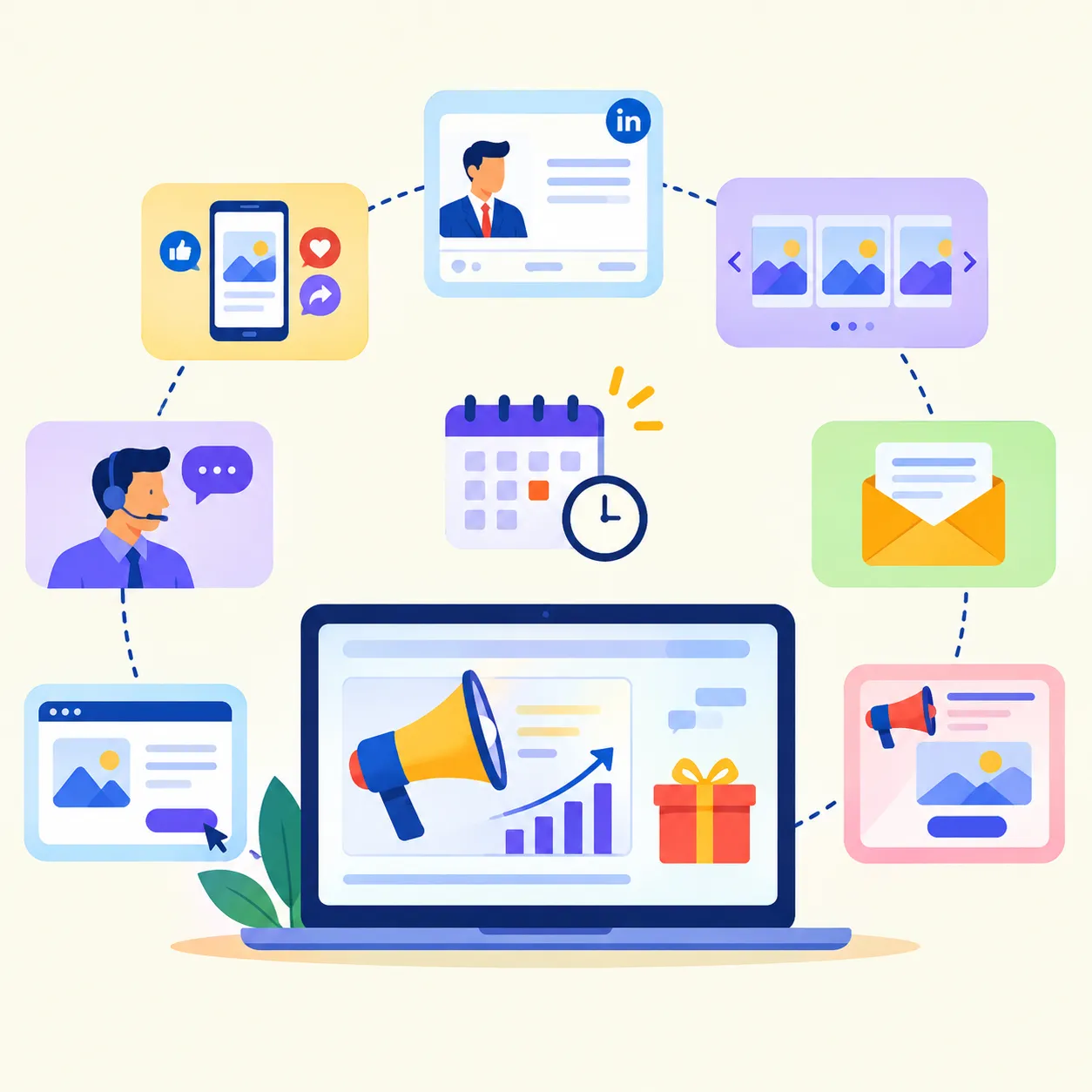
A stronger festive journey might begin with an executive LinkedIn post, followed by a carousel explaining an industry challenge, an email containing a useful resource, a targeted ad, and remarketing for users who engaged with the content.
Different touchpoints serve different purposes:
Social content creates visibility. Email nurtures existing relationships. Paid media expands targeted reach. Landing pages capture intent. Sales outreach converts interest into conversation.
With a structured social media marketing strategy, businesses can maintain consistency while adapting content to different channels and audience behaviours.
Plan Beyond the Festival Date
One of the biggest differences between B2C and B2B marketing is the length of the buying cycle. Your campaign should therefore not end when the festival does.
Build pre-festival, during-festival, and post-festival phases:
Before the festival, focus on awareness and anticipation. During the period, use timely content, appreciation, and engagement. Afterwards, retarget engaged audiences, nurture leads, and transition the conversation towards business priorities for the next quarter.
Ideally, campaign planning should begin several weeks in advance so teams have time for audience research, concepts, approvals, production, landing pages, media planning, tracking, and sales alignment.
Measure Business Impact, Not Just Festive Likes
High engagement on a festive post feels encouraging, but it does not necessarily mean the campaign succeeded.
Choose metrics based on the original objective:
For awareness, track reach, impressions, video views, branded searches, and website traffic. For engagement, monitor meaningful comments, shares, click-throughs, and audience interactions. For demand generation, measure downloads, enquiries, qualified leads, cost per lead, meetings booked, and influenced pipeline.
B2B campaigns often create value across several touchpoints. Measurement should therefore look beyond last-click conversions and consider how festive activity contributes to the wider buyer journey.
Make Festive Marketing Part of Your B2B Growth Strategy
The best festive campaigns do not suddenly make a B2B brand behave like a consumer company. They use the season as an opportunity to make the brand more relevant, relatable, and memorable.
Thoughtful festive campaign planning for B2B brands connects seasonal context with business objectives. When audience segmentation, content, LinkedIn, paid media, nurturing, and measurement work together, a festive campaign can create value well beyond a few days of celebration.
The question is no longer whether B2B companies should participate in festive marketing. It is whether they can participate in a way that genuinely contributes to their brand and pipeline.
Discover how Bestow can help you combine strategy, creative thinking, and digital marketing to build stronger brand journeys.
Ready to plan yours?
Connect with Bestow and turn seasonal attention into meaningful business opportunities.
Connect with BestowFAQs
Yes. Festive campaigns can help B2B companies improve visibility, strengthen client relationships, humanise their brand, and re-engage prospects when the campaign is connected to a relevant business objective.
B2B brands can use thought leadership, customer appreciation, leadership content, webinars, useful resources, email nurturing, social media, and targeted paid campaigns. The focus should be on relevance and relationships rather than generic festive promotions.
LinkedIn, email, paid digital advertising, remarketing, and the company's website can work particularly well. The right channel mix depends on where decision-makers spend time and the campaign's objective.
LinkedIn ads can be useful when businesses need precise professional targeting by factors such as industry, role, seniority, or company type. Campaign economics and lead quality should be monitored carefully rather than judging success purely by clicks.
Create content that connects timely festive conversations with genuine audience interests, challenges, or aspirations. Interactive posts, leadership perspectives, employee stories, useful resources, and personalised communication can make engagement more meaningful.
Industry insights, customer appreciation stories, team-focused content, checklists, reports, videos, carousels, webinars, and thought-leadership posts can all work well. The strongest content connects the festive context naturally with the brand's expertise.
B2B brands should ideally begin planning several weeks before the festive period. Starting early gives marketing and sales teams enough time for strategy, creative development, approvals, media planning, tracking, and follow-up journeys.
Categories
Recent Blogs
Send us a message
We'd love to hear from you
Let's build a plateform that works for you busines and the advertisers who trust it.
Talk to Our Expert