Why Community-Led Marketing Is Replacing Traditional Funnels
12/11/2026
Start Listening
Why Community-Led Marketing Is Replacing Traditional Funnels
For decades, marketing followed a predictable formula: attract prospects, nurture leads, convert customers, and repeat.
But what happens after someone buys?
Traditional funnels often treat conversion as the finish line. Meanwhile, today's consumers discover brands through conversations, recommendations, creator content, and communities long before visiting a website.
This shift explains why community-led marketing is gaining importance. Instead of continuously paying to acquire attention, brands are building relationships that generate conversations, repeat purchases, and recommendations.
According to the 2026 Edelman Trust Barometer Special Report, 88% of respondents consider brand trust an important or critical purchase criterion. The research also highlights the influence of unpaid customers, peers, and advocates in establishing credibility.
The implication? Brands must think beyond acquiring customers and start creating reasons for people to remain connected.
At Bestow, we combine audience research, creative storytelling, and performance-driven digital strategies to help brands build meaningful connections that support business growth.
Get in touch with the usWhy Traditional Marketing Funnels Are Losing Their Influence
The traditional funnel follows a linear customer journey:
Awareness → Interest → Consideration → Conversion
While useful for understanding acquisition, this framework doesn't fully capture how consumers interact with brands today.
Consider someone discovering a skincare product through an Instagram Reel. They might check Reddit discussions, read customer reviews, ask friends, and eventually purchase through a marketplace.
After purchasing, they could share their experience and influence several other buyers.
Where does that recommendation fit into a funnel that ends at conversion?
This is why discussions around why funnels are dying are becoming more relevant. The funnel isn't disappearing; its limitations are becoming harder to ignore.
Three developments explain the shift:
Non-linear discovery: Consumers move between search, social media, communities, and marketplaces.
Trust-driven decisions: Independent experiences can carry more credibility than promotional messaging.
Post-purchase influence: Existing customers can generate awareness and demand among new audiences.
Brands now need a marketing funnel alternative that accounts for relationships before and after purchases.
Community vs Funnel: What Actually Changes?
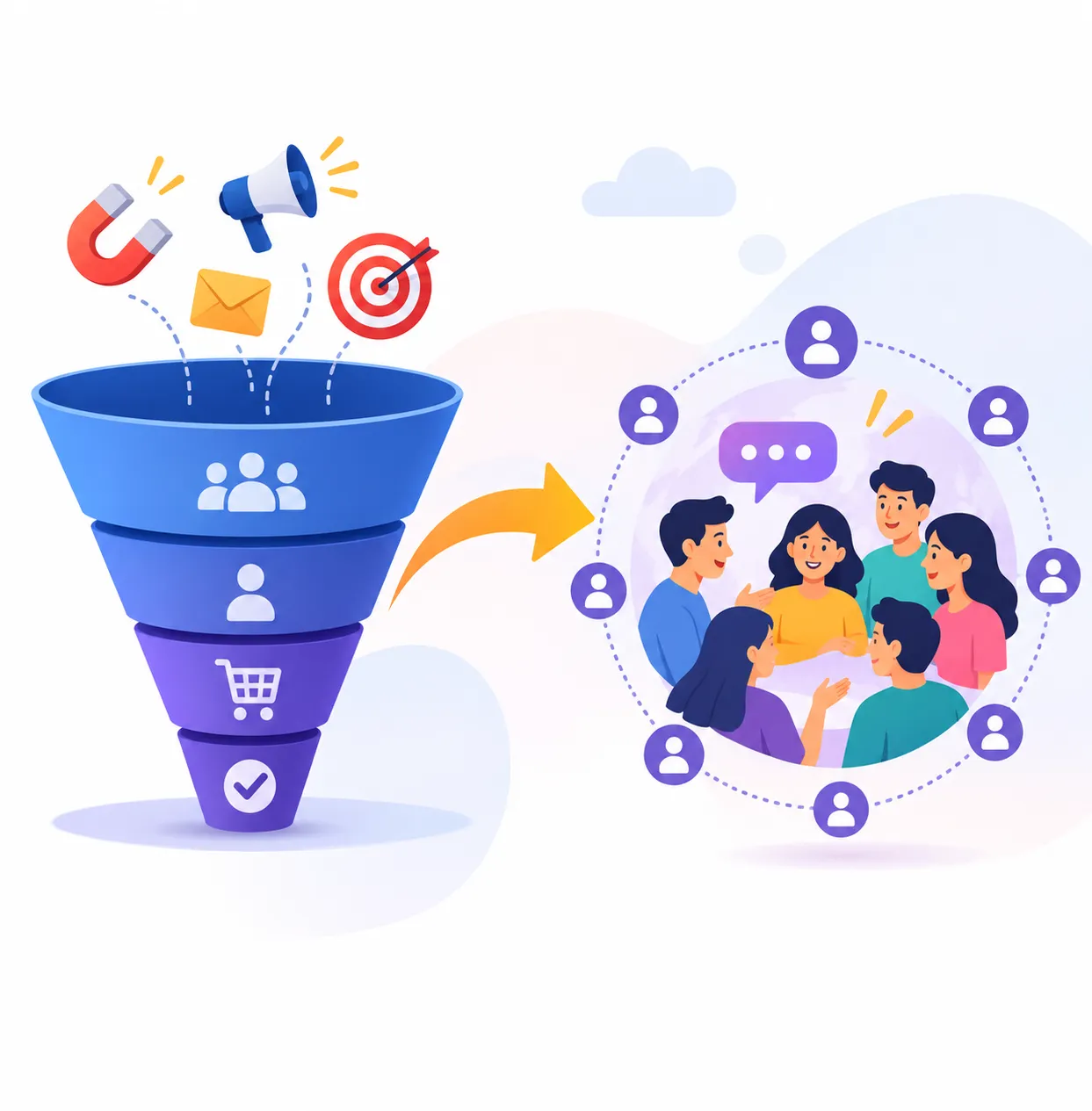
The difference lies in how brands approach growth.
| Traditional Funnel | Community-Led Approach |
|---|---|
| Focuses on acquiring customers | Focuses on acquiring and retaining relationships |
| Primarily brand-to-customer communication | Encourages customer-to-customer conversations |
| Conversion is the primary endpoint | Advocacy creates new opportunities |
| Often depends on continuous acquisition spending | Can generate organic recommendations |
| Measures leads and conversions | Also measures participation, loyalty, and referrals |
The objective isn't to eliminate acquisition campaigns. It's to connect acquisition with retention, advocacy, and long-term customer value.
This is where community-led growth becomes particularly valuable.
The Loyalty Loop: How Communities Create Continuous Growth
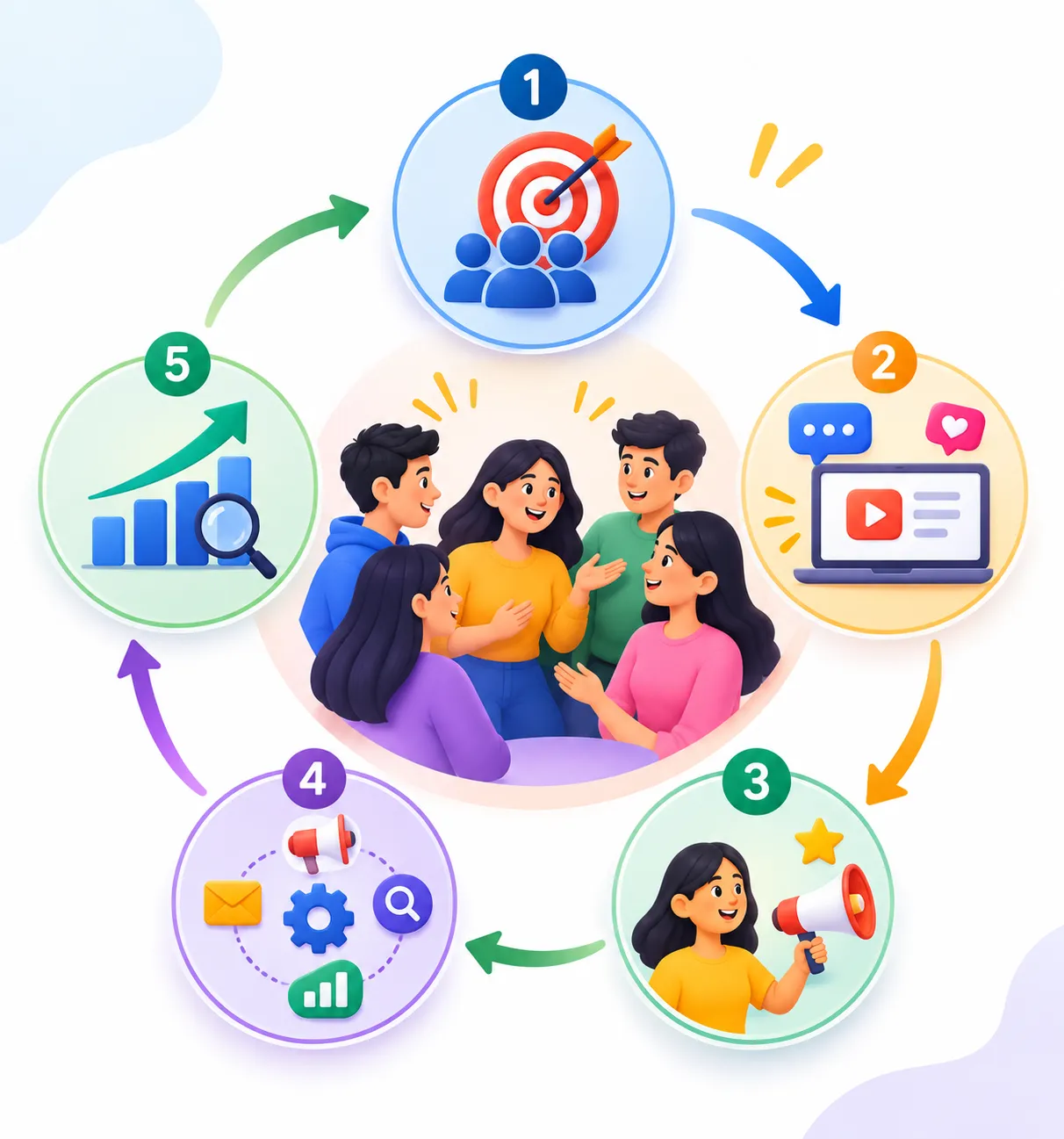
Unlike linear funnels, a loyalty loop recognizes that satisfied customers can influence future purchases, both their own and those of others.
The process typically follows five stages:
Discover: People encounter a brand through content, recommendations, or advertising.
Connect: They participate in discussions, follow creators, or interact with existing customers.
Experience: They purchase and evaluate the product or service.
Advocate: Satisfied customers share reviews, experiences, and recommendations.
Attract: Their advocacy introduces new potential customers to the brand.
This continuous engagement loop resembles flywheel marketing, where positive customer experiences generate momentum for future growth.
The result can be a network effect: as more customers participate and share useful experiences, the community becomes increasingly valuable to others.
However, that momentum depends on genuine participation, not simply accumulating followers.
Why Communities Are Becoming Powerful Marketing Assets
1. Consumers Trust People, Not Just Promotional Messages
A brand can claim its product is excellent. But a customer's detailed experience can make that claim more believable.
Edelman's 2026 brand research found that 54% of respondents feel connected to people who use the same brands they do.
That shared identity creates opportunities for word of mouth, customer conversations, and brand advocates.
2. User-Generated Content Makes Marketing More Relatable
Customer photographs, product demonstrations, testimonials, and reviews provide practical evidence of real experiences.
Instead of relying exclusively on polished advertisements, brands can incorporate authentic UGC into their content strategies.
Bestow explores this approach in its article on how UGC and FOMO can support small-business growth.
Brands can also learn how user-generated content improves engagement and sales by encouraging meaningful customer participation.
3. Smaller Creators Can Build Stronger Connections
Massive influencer followings don't automatically translate into credibility.
Micro-influencers often serve focused audiences where familiarity, relevance, and conversations matter.
For regional businesses, collaborating with trusted local creators can be particularly useful.
Explore Bestow's insights on micro-influencer marketing for Gujarat SMEs to understand how smaller creators can support brand visibility.
4. Community Participation Creates Long-Term Value
The 2025 Sprout Social Index surveyed over 4,000 consumers and found that brands need to understand cultural context rather than simply chase trends.
This reinforces the importance of consistent, relevant interactions.
Communities give businesses opportunities to answer questions, collect feedback, recognize loyal customers, and strengthen relationships.
Rather than measuring success through impressions alone, brands can focus on meaningful participation and referral growth.
How Brands Can Build a Community-Led Marketing Strategy
Moving beyond the sales funnel doesn't require launching an enormous online community overnight.
It requires making customer relationships part of everyday marketing.
Step 1: Understand What Brings Your Audience Together
Identify shared interests, problems, aspirations, and experiences.
A fitness brand might unite beginners pursuing healthier lifestyles. A B2B software company might bring professionals together to exchange practical advice.
The community needs a purpose beyond purchasing products.
Step 2: Create Content That Encourages Conversations
Move beyond promotional announcements.
Experiment with:
Customer stories and real-world experiences
Educational discussions and interactive polls
Behind-the-scenes content
Community challenges and collaborative campaigns
A well-planned content strategy for Gujarat brands can help businesses develop relevant, culturally resonant conversations.
Step 3: Turn Customers Into Active Participants
Invite customers to contribute ideas, share experiences, and help others.
An ambassador program can recognize enthusiastic customers through early access, exclusive experiences, or appropriate rewards.
Participation should remain voluntary, and incentivized endorsements should be disclosed transparently.
Step 4: Connect Community Building With Existing Marketing
Community initiatives shouldn't operate separately from advertising, SEO, or email marketing.
A strong lifecycle marketing strategy connects these channels across discovery, purchase, and post-purchase experiences.
Bestow's guide to hybrid marketing strategies explains how businesses can combine different approaches for greater impact.
Similarly, professional social media marketing services can help brands develop content, manage conversations, and measure performance.
Step 5: Measure Relationships Alongside Revenue
Follower counts alone don't indicate community success.
Track metrics such as:
Active participants and repeat engagement
Customer-generated content and referrals
Repeat purchase and retention rates
Customer satisfaction and sentiment
Community-attributed leads and revenue
Bestow's insights on increasing brand engagement further explain why meaningful interactions matter for business outcomes.
The Future Belongs to Brands That Build Relationships
Traditional funnels remain useful for acquisition, but they cannot explain every interaction influencing modern buying decisions.
The future isn't necessarily community vs funnel. It's about combining the strengths of both.
Brands that invest in customer experiences, genuine conversations, and ongoing participation can create growth opportunities that extend well beyond individual transactions.
Because the most valuable customer isn't always the one who purchases once. It might be the one who brings five more.
At Bestow, our research-led approach combines content strategy, social media marketing, creative campaigns, and performance optimization to help brands connect, engage, and convert.
Ready to build stronger customer relationships and create measurable marketing impact?
Get in touch with our team to discuss your next growth strategy.
Connect with usFAQs
It's a strategy that builds growth through meaningful customer relationships, shared experiences, conversations, and advocacy rather than relying exclusively on promotional campaigns.
Traditional funnels primarily track customers toward conversion, while community-led strategies also encourage ongoing participation, loyalty, and recommendations after purchase.
Modern consumers discover and evaluate brands across multiple channels, making their purchasing journeys less predictable and linear.
No. Community strategies complement traditional funnels by strengthening trust, customer relationships, and post-purchase advocacy.
It encourages satisfied customers to share experiences, recommend products, participate in discussions, and generate organic interest.
D2C brands, SaaS companies, educational businesses, lifestyle brands, and niche service providers can benefit when customers share common interests or challenges.
Identify your audience's shared interests, choose suitable platforms, create valuable conversations, and encourage genuine customer participation.
Monitor active participation, referral conversions, customer retention, repeat purchases, engagement quality, and revenue influenced by community interactions.
Categories
Recent Blogs
Send us a message
We'd love to hear from you
Let's build a plateform that works for you busines and the advertisers who trust it.
Talk to Our Expert