How Bestow Builds Timeless Brand Identities for Food, FMCG & QSR Businesses
26/08/2026
Start Listening
How Bestow Builds Timeless Brand Identities for Food, FMCG & QSR Businesses
Walk through a supermarket aisle or scroll through a food delivery app and you will notice something interesting: many brands you have known for years look different from how they did a decade ago.
Logos become cleaner. Packaging becomes simpler. Brand voices become more conversational. Restaurants redesign their spaces, while FMCG companies rethink everything from typography to digital content.
Yet the strongest brands remain instantly recognisable.
That is the real challenge of brand evolution. Businesses need to move with changing consumers, platforms and cultural expectations without abandoning the distinctive qualities that created recognition and trust in the first place.
For food businesses, the stakes are particularly high. A familiar colour, package, mascot, tagline or restaurant experience can carry years of memories. Changing everything for the sake of looking modern can weaken customer loyalty, while refusing to change can make a brand feel irrelevant.
The goal, therefore, is not simply to look new. It is to become more relevant while remaining unmistakably you.
Is your brand ready for its next chapter without losing what made people notice it in the first place? Explore how Bestow helps brands create meaningful, memorable experiences.
Get in touch with the usWhat Is Brand Evolution?
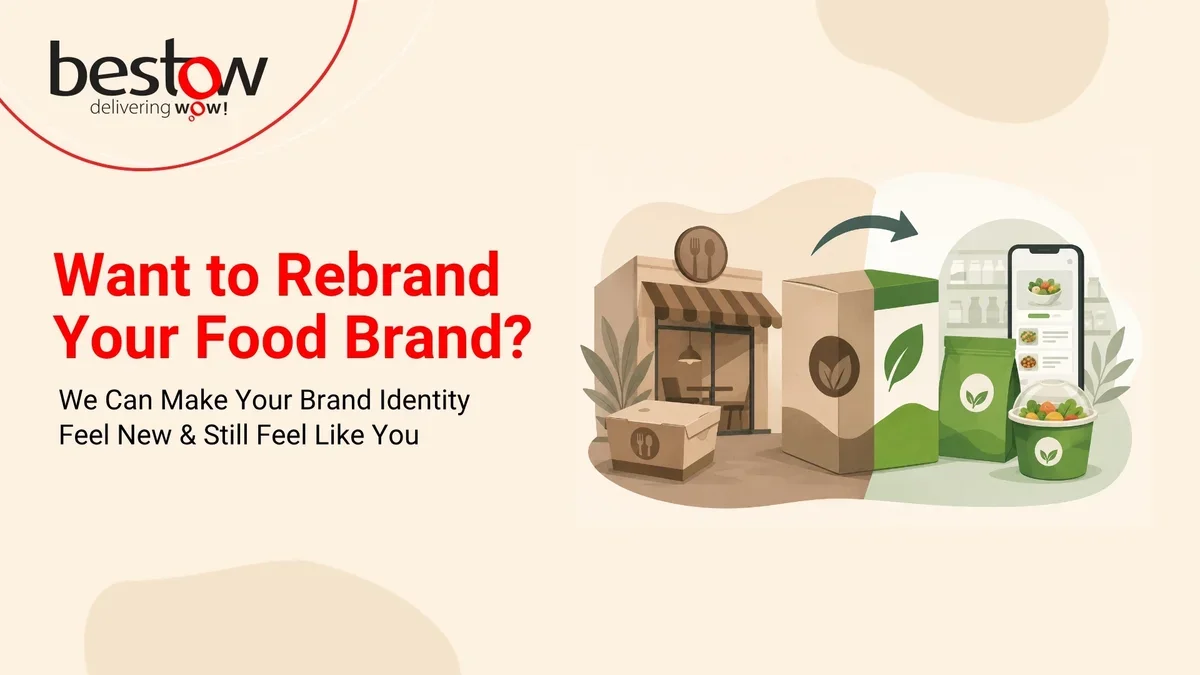
Brand evolution is the deliberate process of updating how a business looks, communicates and positions itself as its market changes.
Unlike a dramatic rebrand, evolution does not necessarily replace the existing brand identity. Instead, it identifies which elements continue to create value and which ones need to adapt.
Evolution could involve refreshing a logo, changing packaging, refining messaging, introducing a new tone of voice, improving digital experiences or reconsidering brand positioning.
A strong rebranding strategy begins by understanding why change is necessary rather than deciding what the new logo should look like.
This is where strategic thinking matters. Bestow's approach to brand strategy focuses on building a clear foundation around the audience, market, differentiation and long-term direction before visual decisions are made.

Why Iconic Food Brands Keep Reinventing Themselves
Food brands operate in an unusually emotional category. People do not choose food entirely through rational comparisons.
A biscuit may remind someone of childhood. A restaurant may be associated with family celebrations. A beverage can become connected to friendships, summers or festivals.
This is why emotional branding is so powerful in the category.
As explored in Bestow's insights on brand storytelling with emotion, memorable brands build associations beyond products.
But emotions alone cannot protect a business from changing markets.
Consumers discover brands through Instagram and delivery apps rather than supermarket shelves alone. Younger audiences expect different conversations from businesses. Packaging needs to work as a thumbnail as well as on a physical shelf. Health, sustainability, convenience and transparency can influence buying decisions.
Brands therefore reinvent themselves because their customers' worlds keep changing.
The secret is maintaining a recognisable core while adapting its expression.
That principle becomes increasingly important as consumers expect brands to behave more like personalities. Bestow's perspective on why brands need personality demonstrates why recognisable character can become an important competitive advantage.
Branding Lessons from Global & Indian Food Brands
Some of the biggest lessons in food brand strategy come from observing brands that have survived multiple generations.
1. Protect Your Distinctive Assets
McDonald's can modernise its advertising, restaurants and digital ordering experience without abandoning the Golden Arches.
Amul can respond to current events while maintaining a distinctive illustration style and voice that audiences immediately recognise.
The lesson is simple: identify the elements people mentally associate with your business before redesigning them.
Your visual identity might include far more than your logo. Colours, typography, package structure, photography, illustrations and even the way food is presented can become memory cues.
A strategically developed brand identity helps businesses create and protect these recognisable assets across touchpoints.
2. Let the Story Grow with the Audience
A company's original story does not have to remain its only story.
As new generations enter the market, businesses need to translate their values into language that matters to those consumers. Bestow's guide to developing brand stories for Gen Z and millennials explains why audience understanding is essential when shaping contemporary narratives.
3. Give the Brand a Reason to Matter
Modern consumers can have hundreds of alternatives in almost every food category.
Purpose can help businesses move beyond product features, provided it is authentic rather than manufactured for campaigns. Purpose-driven branding can help create deeper connections when a brand's actions consistently support what it claims to believe.
4. Use Insights, Not Instinct Alone
Brand evolution should never begin with "Our logo looks old."
Consumer perception, competitive shifts, sales patterns and category trends should influence decisions. Understanding how insights transform brand strategy can help businesses distinguish meaningful evolution from cosmetic change.
Common Branding Mistakes Businesses Make
One of the biggest mistakes businesses make is confusing novelty with progress.
A completely new logo, trendy colour palette or witty social voice may generate temporary attention but can destroy accumulated recognition when disconnected from the existing brand.
Other common problems include:
Following design trends blindly: What looks contemporary today may feel dated surprisingly quickly.
Changing too many assets simultaneously: Customers need recognisable anchors during an evolution.
Ignoring the existing audience: Attracting younger consumers should not automatically mean alienating loyal customers.
Inconsistent implementation: Packaging says one thing, Instagram another and the physical outlet something entirely different.
Copying competitors: Category conventions are useful, but imitation weakens differentiation.
Treating branding as decoration: A beautiful logo cannot compensate for unclear positioning.
Strong brand consistency does not mean repeating identical designs forever. It means ensuring every new expression still feels connected to the same underlying brand.
That consistency must extend beyond packaging into menus, brochures, point-of-sale material and other marketing collaterals.
How to Evolve Without Losing Brand Identity
The safest way to evolve is to first separate your brand's core from its expression.
Define What Cannot Change
Ask what customers recognise and value most.
Is it a colour? A promise? A tone? A product ritual? A mascot? A founding story?
These are potential brand equities worth protecting.
Understand What Has Become Outdated
Next, identify elements preventing growth.
Perhaps packaging performs poorly on e-commerce platforms. Maybe the tone sounds too formal for younger audiences. The brand may have expanded beyond its original positioning.
Change should solve these problems—not simply satisfy an urge to look different.
Build Evolution Around Strategy
Every design decision should connect to business goals.
For example, a traditional food brand trying to reach urban Gen Z consumers may modernise its typography and content while preserving familiar colours, flavours and storytelling cues.
This is where professional Brand Identity Solutions combine strategy with creative execution rather than treating branding as an isolated design project.
Test Across Real Touchpoints
Never judge an identity only from a presentation slide.
Test it on packaging, restaurant signage, delivery apps, social media, websites, advertisements and mobile screens. Your identity must survive the environments where customers actually encounter it.
A coordinated digital marketing strategy can then ensure the evolved brand reaches audiences with consistent messaging across digital channels.
How Bestow Helps Businesses Build Timeless Brands
Great branding sits at the intersection of memory and momentum.
A business needs enough consistency to become recognisable and enough flexibility to remain relevant.
As the Best Branding Agency in Ahmedabad & Vadodara, Bestow approaches branding as a strategic business exercise rather than simply a visual makeover. From research and brand positioning to identity systems, communication and marketing execution, the objective is to create brands capable of growing without losing their character.
For FMCG companies, QSRs, restaurants and emerging startups, that means asking deeper questions before changing visible assets: What do customers already remember? What makes the brand different? Which elements have earned equity? What must evolve for the next stage of growth?
The Best Advertising Agencies are the ones that make a business distinctive enough to be remembered tomorrow, and that is exactly what we do.
Discover the strategic and creative possibilities with Bestow, and connect with us when you're ready to explore what your brand could become.
connect with usFAQs
Successful brands evolve because consumers, competitors, technology and culture continuously change. Evolution allows them to remain relevant while protecting the recognition and trust they have already built.
There is no fixed rebranding schedule. Businesses should consider significant changes when their positioning, audience, market, offerings or identity no longer accurately represents where the company is headed.
Branding builds the identity, positioning and perception of a business, while rebranding intentionally changes existing elements of that system. Rebranding may range from a subtle refresh to a complete strategic and visual transformation.
Brands stay relevant by understanding changing customer expectations while preserving distinctive assets and values. Continuous research, innovation and consistent communication allow them to adapt without becoming unrecognisable.
Absolutely. Strong branding depends more on clarity, differentiation and consistency than company size, and small businesses can build powerful identities by creating distinctive experiences customers repeatedly recognise and remember.
Categories
Recent Blogs
Send us a message
We'd love to hear from you
Let's build a plateform that works for you busines and the advertisers who trust it.
Talk to Our Expert