How to Get Your Brand Cited by ChatGPT, Perplexity & Google AI Overviews
07/09/2026
Start Listening
How to Get Your Brand Cited by ChatGPT, Perplexity & Google AI Overviews
Search is no longer just a page of ten blue links.
A potential customer can now ask ChatGPT for the best software for a particular problem, use Perplexity to compare service providers, or receive an AI-generated response directly inside Google. Instead of clicking through multiple search results, users increasingly encounter synthesized answers that may mention, recommend or cite particular sources.
That creates a new challenge for marketers: How to get your brand cited by AI?
Traditional SEO still matters, but ranking alone is no longer the entire game. Brands also need to become understandable, trustworthy and useful enough for answer engines and large language models to surface their content when generating responses.
This is where Generative Engine Optimization (GEO), entity SEO, structured content and digital authority come together.
Want your brand to move from simply ranking to becoming a source AI platforms can discover and reference?
Explore Bestow’s digital marketing and branding expertise and connect with our team to build an AI-ready search strategy.
connect with our teamWhat Does It Actually Mean to Be “Cited” by AI?
An AI citation happens when an AI-powered search or answer experience uses your website or content as a source and provides attribution, a link, or another identifiable reference to it.
This is different from simply asking a language model about your brand and seeing your name somewhere in its response.
For example, ChatGPT Search can search current web information and include citations that users can open to visit the underlying sources. Perplexity similarly searches the web, synthesizes information and links users to the original sources supporting its answers.
Therefore, AI citations for brands can create a new form of search visibility: your content becomes part of the answer itself rather than merely another result competing for a click.
For businesses adapting to this shift, understanding why GEO is becoming the new SEO is an important starting point.
SEO Gets You Ranked. GEO Helps You Become Citable.
Traditional SEO asks:
“How do we get this page to rank higher?”
GEO adds another question:
“How do we make this information easy for an AI system to find, understand, trust and reference?”
That distinction matters.
Search rankings are still valuable because discoverability on the open web can contribute to broader visibility. But AI-powered experiences may synthesize several sources into one response instead of simply reproducing a traditional ranking order.
This is why brands should think beyond individual keywords.
An effective AI search optimization strategy needs to strengthen topic authority, entities, evidence, content structure and third-party signals across the web.
Our guide comparing GEO vs SEO for ChatGPT and Google AI visibility explores this changing search landscape in greater detail.
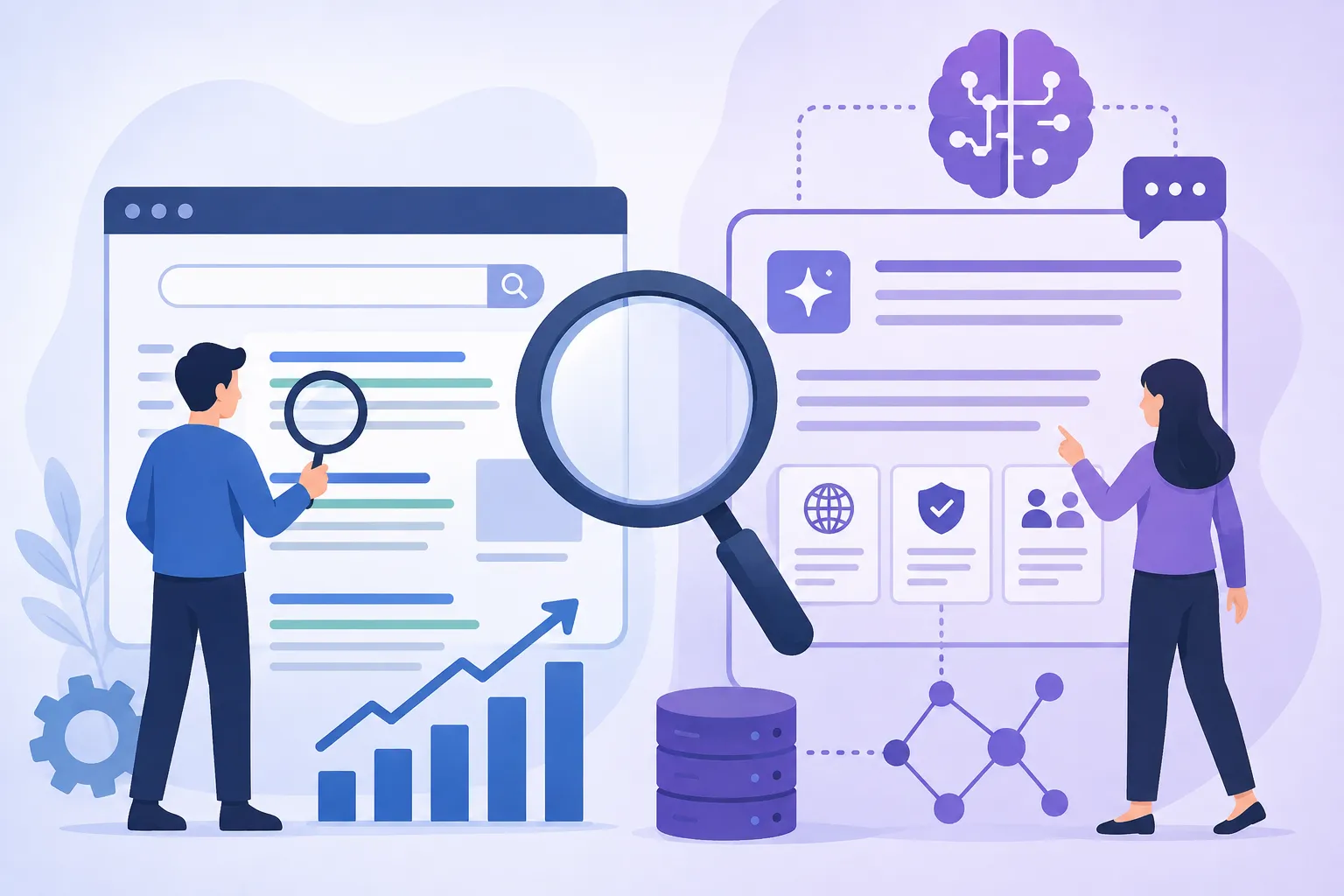
How to Get Your Brand Cited by AI
There is no button that guarantees a ChatGPT citation, Perplexity mention or Google AI Overview appearance. What brands can do is increase their probability of becoming useful source material.
1. Create Content That Answers Specific Questions
Broad articles such as “Complete Guide to Marketing” may demonstrate expertise, but AI search often begins with highly specific conversational queries.
Think:
How much should a B2B company spend on LinkedIn ads?
What is the difference between SEO and GEO?
Which marketing strategy works for a manufacturing company?
How can a local business appear in AI search?
Build pages that answer real questions clearly and early.
Your content should give answer engines a concise response first and supporting explanation, evidence, examples and context afterwards.
That is citable content: information that can easily support a specific claim or answer.
2. Build Topical Authority Instead of Publishing Random Keywords
One article rarely establishes expertise.
If you want to get cited by ChatGPT for branding, for example, your website should demonstrate genuine depth across connected subjects such as brand positioning, identity, strategy, customer research and rebranding.
Create interconnected content clusters rather than isolated keyword pages.
The goal is to make the relationship between your brand and its expertise consistently understandable across your website.
This is where entity SEO becomes increasingly important. Your company should exist online as a clearly defined entity associated with particular topics, services, people and expertise.
3. Make Facts Easy to Extract and Verify
AI engines need information they can interpret efficiently.
Avoid hiding the core answer beneath hundreds of words of introduction.
Use descriptive headings, concise definitions, comparison tables where appropriate, FAQs, statistics with original sources, expert commentary, numbered processes and clearly labelled examples.
If you publish original research, explain the methodology. If you cite a statistic, link to the original study rather than another blog quoting it.
Clear source attribution makes your content more useful to readers and strengthens its credibility.
4. Strengthen E-E-A-T Signals
Experience, Expertise, Authoritativeness and Trustworthiness remain useful principles for creating content people can trust.
Show who created the content. Add meaningful author bios. Demonstrate first-hand expertise where relevant. Keep important pages updated. Support significant claims with reputable evidence and make company information transparent.
Perplexity, for example, says its source review process considers factors such as whether websites identify authors and distinguish news from advertising or opinion.
Strong brand authority is built through consistent evidence, not simply by repeatedly describing your company as an expert.
5. Use Schema Markup and Structured Data Properly
Schema markup / structured data can help machines interpret what a page represents, including organizations, people, products, articles, events and other entities.
However, schema should not be treated as a magic “AI citation” switch.
Think of structured data as one component of making your website machine-readable. Combine it with strong on-page information architecture, crawlability, internal linking, entity consistency and high-quality content.
For businesses rebuilding their technical strategy around intelligent search, Bestow’s AI-powered SEO approach provides a broader framework.
6. Build Authority Beyond Your Own Website
You can call yourself the “leading agency” 100 times. That does not make the claim independently credible.
Third-party validation matters.
Relevant editorial mentions, industry publications, interviews, directories, research citations, customer reviews, expert contributions and reputable backlinks can reinforce the connection between your brand and its area of expertise.
Think of this as building a stronger digital footprint around your entity.
When information about your business is consistent across authoritative sources, machines have more context for understanding who you are and what you are known for.
This is closely connected to the idea of a knowledge graph, where relationships between organizations, people, services and topics help systems interpret entities rather than isolated strings of keywords.
How to Rank in Google AI Overviews
Businesses trying to rank in Google AI Overviews should avoid treating AI Overviews as an entirely separate search ecosystem.
Strong technical SEO, useful content, clear page structure, search intent alignment, authority and trustworthy information remain fundamental.
But content also needs to work well within conversational search.
Instead of optimizing only around “digital marketing agency Ahmedabad,” for instance, consider the questions surrounding that topic:
“What should I look for in a digital marketing agency?”
“How much should digital marketing cost?”
“SEO agency vs full-service marketing agency: which should I choose?”
Building content around the entire decision journey creates more opportunities for your expertise to become relevant to AI-generated answers.
Read more about how Google AI Mode is changing search behaviour in India.
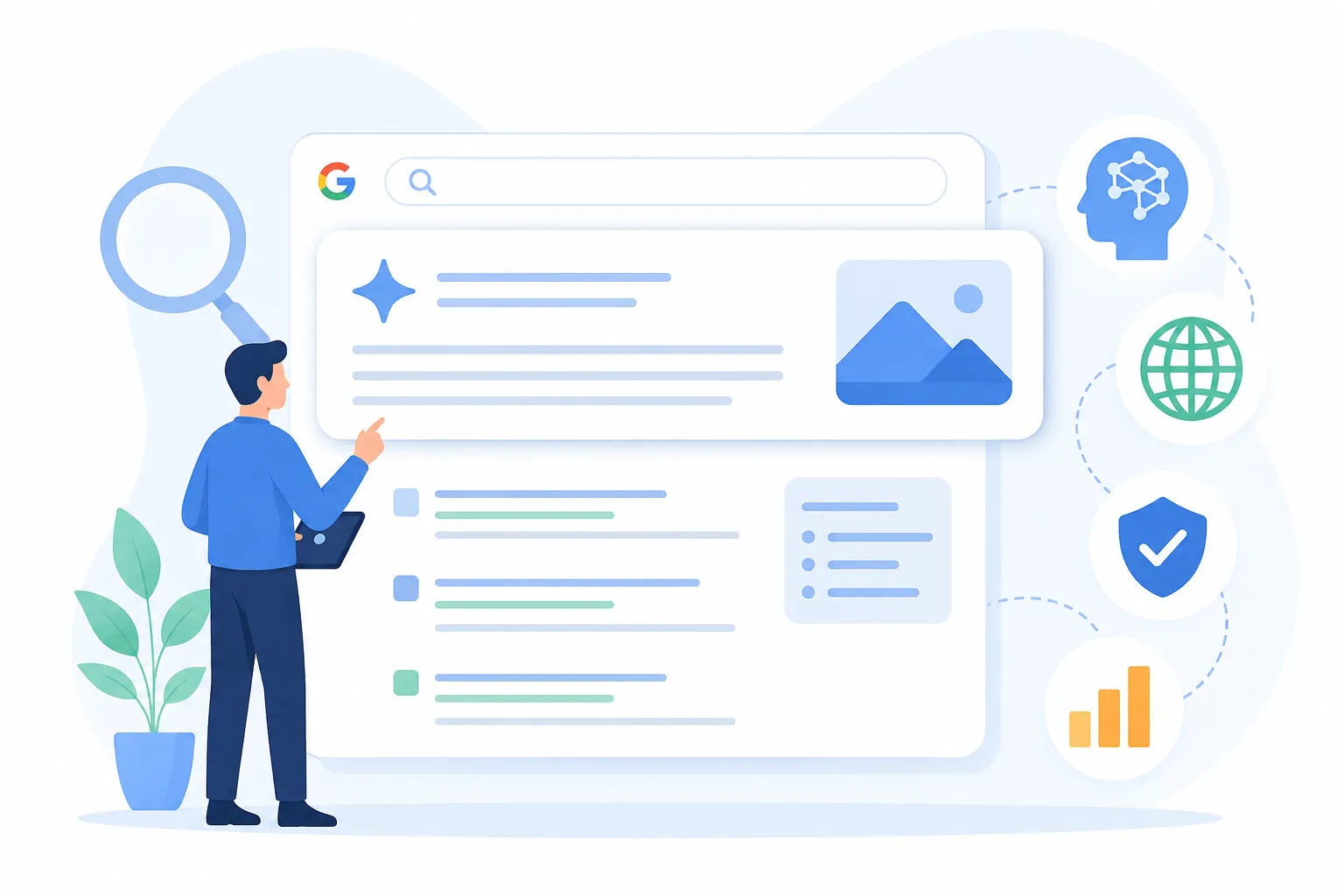
How to Get Mentioned in Perplexity
To get mentioned in Perplexity, concentrate on producing accessible, current and verifiable information.
Perplexity describes itself as an answer engine that searches the web and synthesizes answers with citations to original sources. That means pages designed only to attract clicks but offering little original information are unlikely to be your strongest GEO assets.
Create pages worth referencing.
Original research, statistics, expert explanations, technical documentation, comparison content, detailed guides and genuinely useful answers give an AI system something concrete to extract.
The principle is simple:
Don’t only create content that deserves to rank. Create information that deserves to be referenced.
Technical Accessibility Matters for ChatGPT Too
Excellent content cannot become a useful web source if systems cannot access it.
OpenAI states that public websites can appear in ChatGPT Search and advises publishers that want their content discoverable and citable to ensure they are not blocking OAI-SearchBot.
So LLM SEO is not purely a writing exercise. Crawlability, robots directives, site architecture, indexability and technical health all deserve attention.
Once that foundation is established, Generative Engine Optimization services can help businesses develop content and visibility strategies specifically for AI-driven discovery.
Measure AI Visibility, Not Just Rankings
Traditional reporting focuses heavily on keyword positions, impressions and organic clicks.
AI search requires additional questions:
Is your company being mentioned for relevant prompts?
Which pages are receiving referral traffic from AI platforms?
Which competitors appear when your brand does not?
What sources are repeatedly being cited?
How accurately do AI engines describe your services?
Build a list of commercially important prompts and test them periodically across platforms. Combine this with analytics, referral data and brand mention tracking.
AI visibility can vary depending on the prompt, search mode, available sources and changing systems, so treat monitoring as an ongoing process rather than a one-time ranking check.
And remember that AI visibility should ultimately contribute to business outcomes. See how ChatGPT can also support lead-generation strategies.
The Brands AI Can Understand Are More Likely to Be Discovered
The future of search is not about abandoning SEO for GEO.
It is about expanding what optimization means.
Brands need technically accessible websites, credible expertise, clear entity signals, structured information, original insights and content that directly answers the questions customers are asking.
The objective is no longer simply to become another link on a results page. It is to become a reliable source when AI systems assemble the answer.
That is the bigger opportunity behind How to get your brand cited by AI: build enough clarity, usefulness and authority that your business becomes part of the information ecosystem surrounding your category.
Ready to build visibility for both traditional and AI-powered search?
Discover how Bestow can strengthen your brand’s digital authority, or get in touch with Bestow to discuss an SEO and GEO strategy built for the next generation of search.
connect with usFAQs
It means an AI-powered search response identifies your website or content as a source supporting part of its answer, potentially giving users a direct path to your page.
Traditional Google rankings position webpages within search results, while an AI engine can synthesize information from multiple sources into a direct answer and cite selected sources within that response.
Generative Engine Optimization (GEO) is the practice of improving content and digital authority so a brand has a better chance of being discovered, understood and referenced by generative AI and answer engines.
Structured data can help search systems understand page content and entities, but schema alone does not guarantee inclusion in AI Overviews. It should support a broader SEO, content and authority strategy.
There is no fixed timeline. Results depend on factors including crawlability, competition, content quality, authority, freshness and how relevant your information is to particular queries.
Yes. Smaller businesses can improve their chances by publishing authoritative niche or local information, maintaining consistent entity signals and answering specific questions better than broader competitors.
Useful source material can include original research, statistics, expert explanations, detailed guides, comparisons, documentation and pages providing clear, verifiable answers to specific questions.
Create a recurring set of relevant prompts and manually monitor brand mentions and citations across AI platforms. Pair those checks with analytics and referral data to understand whether AI visibility is also driving visits and conversions.
Categories
Recent Blogs
Send us a message
We'd love to hear from you
Let's build a plateform that works for you busines and the advertisers who trust it.
Talk to Our Expert