Search Everywhere Optimization: The New SEO Framework
22/09/2026
Start Listening
Search Everywhere Optimization: The New SEO Framework
For years, "search visibility" largely meant one thing: appearing on Google.
That model is changing.
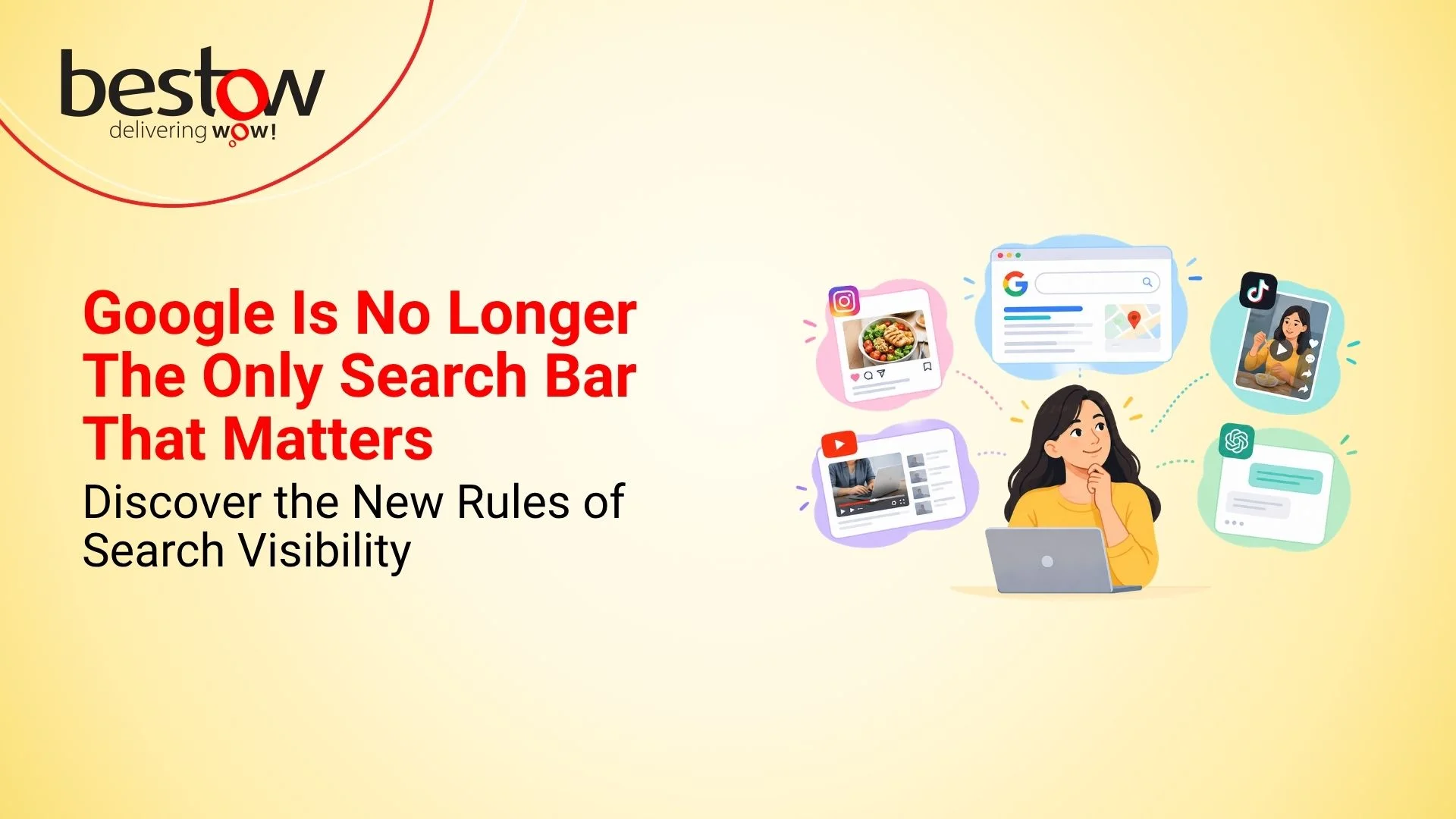
Today, someone looking for a restaurant may search Instagram. A buyer comparing software might ask ChatGPT. A shopper may look for reviews on YouTube, while someone seeking a quick tutorial could go directly to TikTok. Google itself is becoming more answer-led with AI-generated results, featured snippets, maps, videos, and other SERP features.
Search has not disappeared. It has fragmented.
This is where Search Everywhere Optimization enters the picture. Instead of optimizing a brand for one search engine, it focuses on making the brand discoverable wherever its audience searches, compares, asks questions, and makes decisions.
For businesses planning their SEO 2026 strategy, the question is therefore shifting from "How do we rank on Google?" to "How do we become discoverable everywhere our customers look?"
Search behaviour is evolving faster than traditional SEO strategies.
Explore Bestow's digital-first approach to building stronger brand visibility across today's discovery ecosystem.
Get in touch with the usWhat Is Search Everywhere Optimization?
Search Everywhere Optimization is an approach to increasing a brand's visibility across the complete digital discovery ecosystem rather than concentrating exclusively on conventional search engines.
Think of today's discovery platforms: Google, YouTube, TikTok, Instagram, marketplaces, maps, Reddit-style communities, voice assistants, ChatGPT, Perplexity, Gemini and other answer engines.
Each platform has its own algorithms, content formats, ranking signals, and user behaviours. However, they share one fundamental principle: users arrive with intent.
The goal of search everywhere is to understand that intent and create content that can satisfy it on the platform where it occurs.
This makes intent-based content increasingly important. Instead of simply targeting a keyword, brands need to understand the question behind it, the format people expect, and where they are most likely to ask it.
Why Traditional SEO Alone Is No Longer Enough
Traditional SEO remains valuable. Websites, technical health, backlinks, authority, keyword relevance, and quality content still matter. What has changed is the number of places competing to answer a user's question.
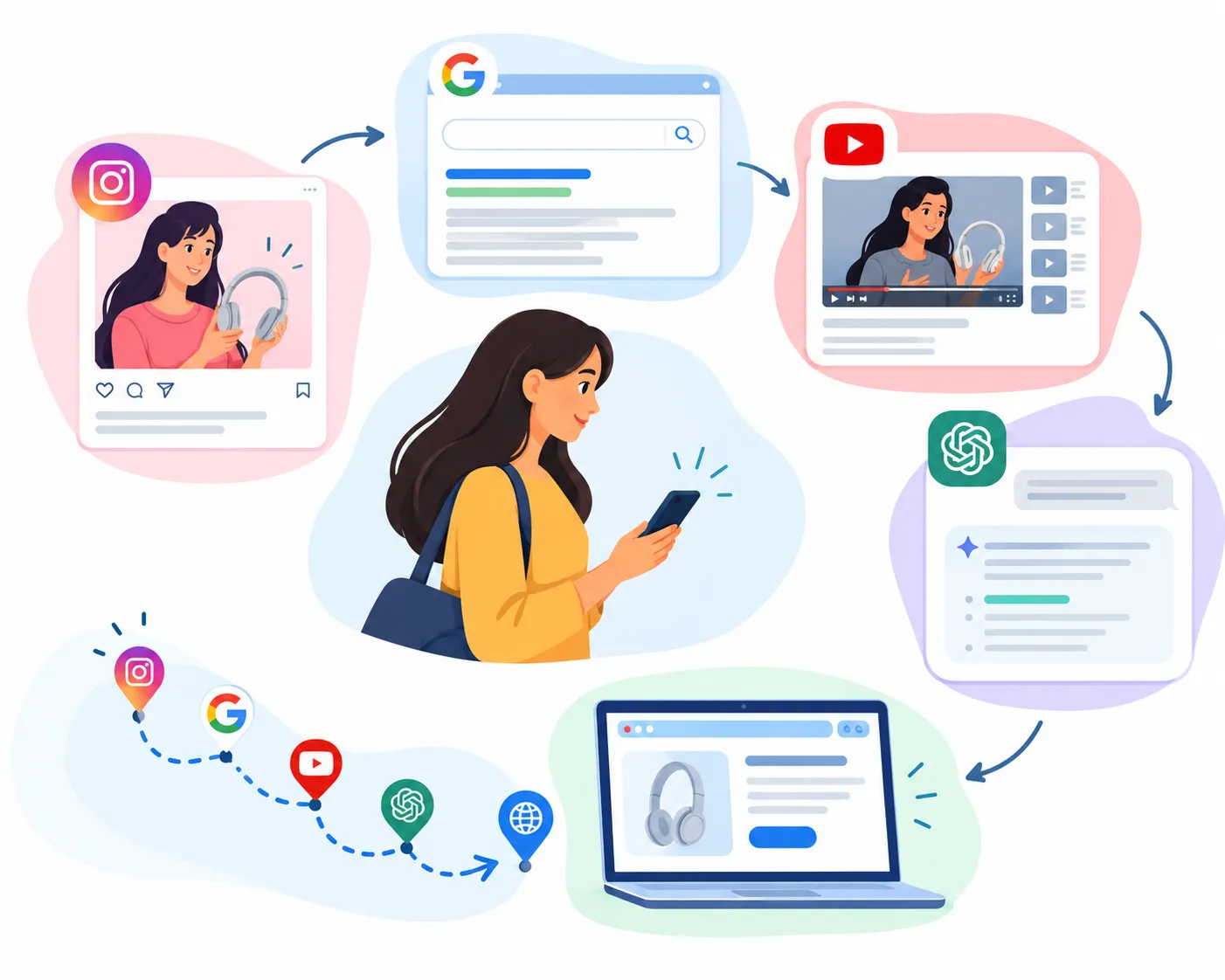
A consumer may discover a product on Instagram, research it through Google, watch reviews on YouTube, ask an AI assistant to compare alternatives, and finally visit the company's website.
This creates a decentralized search journey rather than a single linear funnel.
Even Google is increasingly answering questions directly through AI experiences. Bestow's analysis of how Google AI Mode is changing search in India demonstrates why businesses must prepare for search journeys in which conventional organic listings are only one component of visibility.
The new SEO framework therefore expands SEO rather than abandoning it.
From Google Rankings to Omnichannel Visibility
The old SEO question was:
"Where do we rank?"
The better question today is:
"Where are we discoverable?"
That distinction matters.
A brand may hold excellent Google positions yet remain absent when someone asks an AI platform for recommendations, searches YouTube for a comparison, looks for ideas on Instagram, or uses voice and visual search.
Multi-platform SEO aims to close these gaps by creating omnichannel visibility.
A strong strategy could involve:
Search-optimized website articles for Google
Short educational videos for social search
Long-form videos optimized for YouTube
Structured, authoritative content that answer engines can understand
Local profiles optimized for location-based discovery
Consistent brand information and entities across platforms
Bestow's guide to AI-powered SEO explores how businesses can begin adapting conventional search strategies to this increasingly AI-driven environment.
AI Search Is Creating a New Visibility Layer
AI assistants have introduced another major change: users can increasingly receive synthesized answers without clicking through a conventional list of results.
For brands, visibility may therefore mean being referenced, cited, recommended, or used as a trusted source inside an AI-generated answer.
This is where AI search optimization and Generative Engine Optimization, or GEO, become relevant.
Bestow's guide explaining why GEO is the new SEO explores how brands can structure authoritative, useful content for generative search experiences.
However, GEO and SEO are not identical. Understanding GEO vs SEO and how brands can rank across ChatGPT and Google AI helps businesses see how the two strategies can complement one another.
The goal is no longer just earning a blue link. It is building enough authority, clarity, and relevance to become part of the answer.
Social Platforms Are Search Engines Too
Social media was once treated mainly as a distribution channel. Fabricating discovery behaviors, it also increasingly functions as a discovery engine.
Users search for tutorials, restaurants, destinations, products, reviews, recommendations, trends, and solutions directly inside social platforms.
That makes social search optimization an important part of beyond Google SEO.
Captions, spoken keywords, on-screen text, titles, hashtags, engagement, content relevance, and audience retention can all influence discoverability depending on the platform.
YouTube & TikTok search, for instance, often rewards content that quickly matches a user's specific intent. A generic promotional video may struggle, while a video directly answering "Which running shoes are best for beginners?" has a clear discovery purpose.
Brands therefore need to stop thinking only in terms of "social content" and start thinking about searchable social content.
Zero-Click Search Changes What Success Looks Like
Clicks have traditionally been one of SEO's clearest measures of success. But what happens when someone gets the information they need without visiting your website?
Welcome to the zero-click search environment.
AI summaries, featured snippets, knowledge panels, social videos, maps, and answer engines can provide information before a website visit happens.
That does not automatically make the visibility worthless. Being repeatedly seen as the source of useful answers can contribute to familiarity, trust, branded searches, and future consideration.
Bestow's guide to zero-click marketing and how brands can win explains why marketers need to consider visibility and influence alongside traffic.
Search Everywhere Optimization therefore requires broader KPIs, including mentions, citations, video discovery, branded searches, social visibility, local actions, assisted conversions, and share of search.
Search Is Becoming Multimodal
Typing is only one way people search.
Consumers can speak a question, upload an image, scan an object, use maps, or interact conversationally with an AI assistant.
This makes multimodal discovery another part of search everywhere.
For local businesses in particular, voice and visual discovery can create new opportunities. Bestow's guide to voice and visual search for local brands examines how changing search interfaces affect local discoverability.
Location also remains critical. Accurate business information, reviews, locally relevant content, maps visibility, and entity consistency can influence whether a business appears at the right moment. These local SEO trends in an AI-driven world show why local optimization must evolve alongside broader search behaviour.
How to Build a Search Everywhere Strategy
A practical Search Everywhere Optimization strategy starts with audience behaviour, not platform popularity.
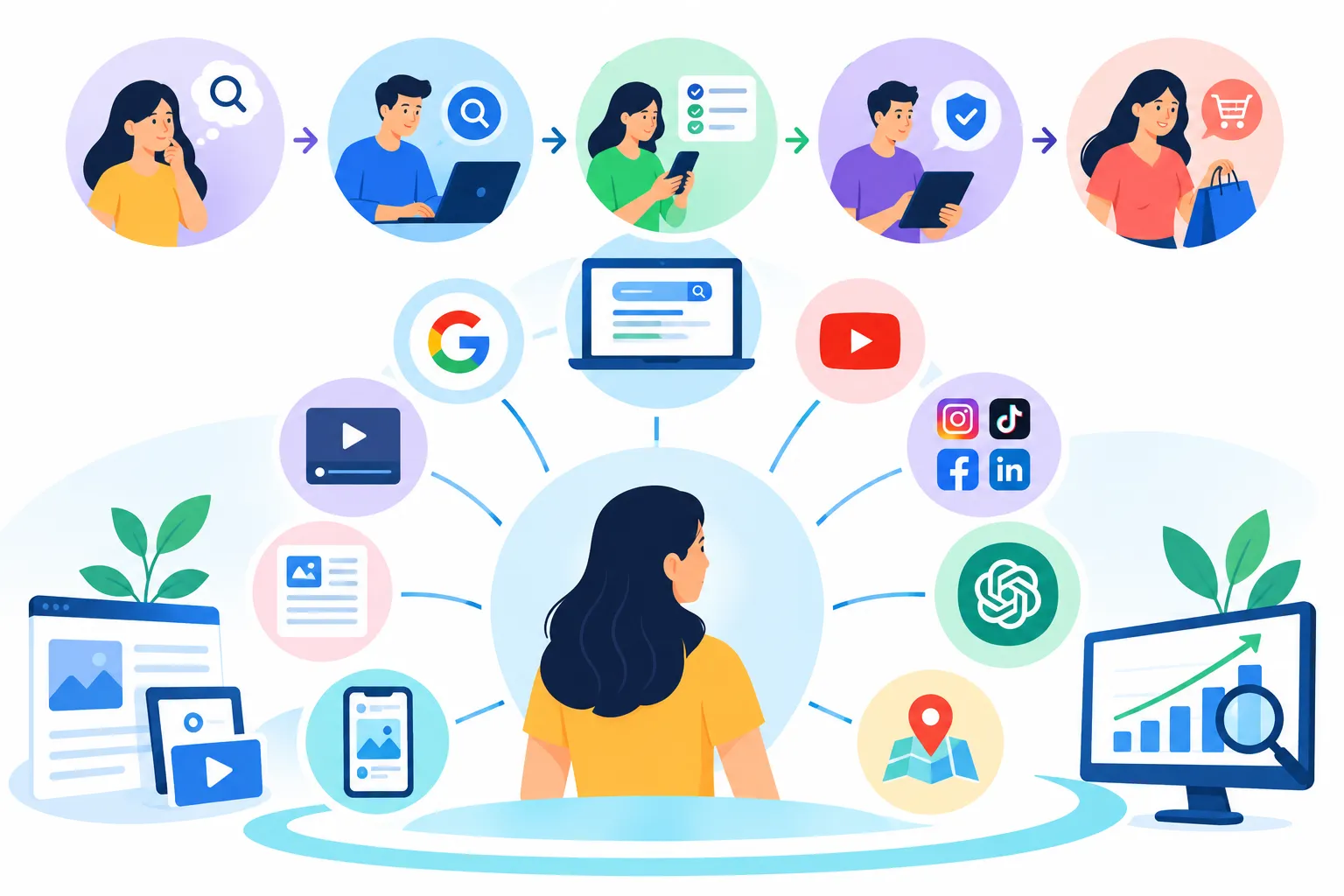
First, map where customers discover, research, compare, validate, and buy. Different industries will have very different search ecosystems.
Next, identify the questions and intentions appearing at each stage. One topic can then be adapted into formats appropriate for different channels rather than copied everywhere.
A detailed guide might become a YouTube explainer, short social videos, FAQs, an AI-friendly summary, visual posts, and local content where appropriate.
Consistency is equally important. Search engines, social platforms, and AI systems should encounter clear signals about who your brand is, what it does, and which topics it has authority on.
Finally, measure outcomes across the ecosystem instead of judging every platform by website clicks alone.
The Future of SEO Is Being Findable Everywhere
SEO is not becoming irrelevant. Its boundaries are expanding.
People still search because they still need information, reassurance, comparisons, recommendations, and solutions. What has changed is where those searches happen and how answers are delivered.
Search Everywhere Optimization responds to that shift by connecting traditional SEO, GEO, AI visibility, video discovery, social search, local optimization, and brand authority into a broader strategy for brand discoverability.
The brands that adapt will not obsess over ranking everywhere for everything. They will identify where their audiences search and become genuinely useful in those moments.
Because the future of search is not simply about winning position one.
It is about being present when the customer starts looking.
Your customers' search journeys no longer begin and end with Google. Discover how Bestow helps brands strengthen their digital visibility across search, social, AI, and emerging discovery channels.
connect with usFAQs
Search Everywhere Optimization is the practice of improving brand visibility across Google, AI answer engines, social platforms, video search, local search, marketplaces, and other digital discovery environments.
Traditional SEO primarily focuses on visibility in search engines such as Google. Search Everywhere Optimization expands that approach to include social, AI, video, local, voice, visual, and other discovery channels.
Consumers now discover and evaluate information through social platforms, video, AI assistants, marketplaces, maps, and communities, making search behaviour increasingly fragmented.
The right platforms depend on audience behaviour, but they may include YouTube, TikTok, Instagram, AI assistants, maps, marketplaces, and industry-specific discovery platforms.
No. It builds on traditional SEO and extends its principles into additional platforms and formats where consumers now search and discover brands.
Create clear, intent-led content that directly answers audience questions while adapting titles, captions, video scripts, structure, entities, and formats to the way each platform retrieves and presents information.
Track a combination of organic visibility, AI citations and mentions, branded search growth, social discovery, video views from search, local actions, engagement, assisted conversions, and website traffic.
Yes. Small businesses can focus on the few platforms their customers actually use rather than trying to appear everywhere, making the strategy practical even with limited resources.
Categories
Recent Blogs
Send us a message
We'd love to hear from you
Let's build a plateform that works for you busines and the advertisers who trust it.
Talk to Our Expert