What Is Entity SEO and Why It's the Foundation of AI Visibility in 2026
11/06/2026
Start Listening
What Is Entity SEO and Why It's the Foundation of AI Visibility in 2026
Traditional search engines relied heavily on keyword matching and optimization. AI search engines such as ChatGPT, Google AI Overviews, Perplexity, and Gemini operate differently. They focus on understanding entities, relationships, and context rather than simply matching keywords.
Brands that fail to prioritize entity SEO risk becoming invisible across AI search and generative discovery platforms. As businesses adapt to this new search environment, entity optimization is becoming one of the most important components of modern SEO strategy.
In this guide, you'll learn what entity SEO is, how AI search engines understand entities, and why entity optimization has become essential for appearing in AI-generated answers.
Future-proof your brand with AI-first SEO strategies designed by Bestow for the next generation of search.
Connect with us
What Is Entity SEO?
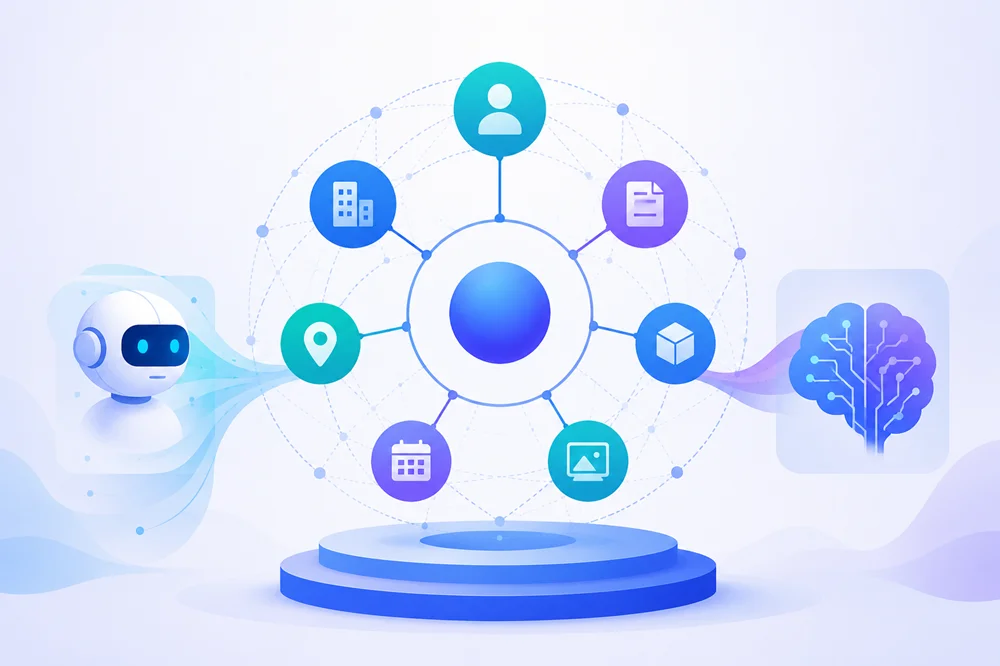
Entity SEO is the practice of optimizing for machine-readable entities—people, organizations, places, products, and concepts—rather than focusing solely on keywords.
The goal is to build a clear, verifiable digital identity that search engines and AI systems can confidently understand, verify, and cite.
In 2026, entity SEO has become one of the highest-leverage strategies for AI visibility.Industry research shows that entity authority is significantly more correlated with AI citations than traditional ranking signals such as backlinks.
When ChatGPT, Perplexity, Gemini, or Google's AI Overviews generate answers, they prioritize sources they can confidently identify through structured data, knowledge graphs, and consistent entity signals.
Entity SEO vs Keyword SEO: A Critical Distinction
| Aspect | Keyword SEO | Entity SEO |
|---|---|---|
| Target |
Search terms and phrases |
People, brands, places, concepts |
| Ranking Unit |
Keywords and backlinks |
Entity relationships and salience |
| AI Understanding |
Limited string matching |
Semantic understanding |
| Citation Value |
Low |
High |
| Future-Proofing |
Declining |
Increasing |
Think of keyword SEO as teaching search engines what words you use.
Entity SEO teaches them who you are.
That distinction often determines whether AI engines cite your brand or ignore it.
How Search Engines Understand Entities
Modern search engines no longer crawl pages solely for keywords.
They build knowledge graphs—massive networks of entities and relationships that help them understand the world.
The Knowledge Graph Advantage
Google's Knowledge Graph contains hundreds of billions of entity relationships and is constantly expanding.
When your brand is properly defined as an entity through structured data, authoritative references, and consistent digital signals, AI systems can:
Identify your brand uniquely
Verify information about your business
Understand relationships between your brand and industry topics
Cite your content confidently in AI-generated answers
Research from Schema App has shown that pages using structured entity markup are cited significantly more often in AI-generated search experiences.
Entity optimization is particularly valuable for businesses with similar names, multiple locations, or complex product offerings because it reduces ambiguity and improves AI understanding.
Keyword SEO vs Entity SEO: Why the Shift Matters
The traditional SEO playbook focused on:
More keywords
More backlinks
More content
AI-driven search rewards something different:
Clarity
Consistency
Context
Relationships
The Fundamental Differences
| Metric | Keyword-First Approach | Entity-First Approach |
|---|---|---|
| Content Strategy |
Target high-volume keywords |
Build topical authority |
| Link Building |
Quantity-focused |
Relationship-focused |
| Technical SEO |
Basic schema |
Complete entity graph |
| AI Citation Potential |
Lower |
Significantly Higher |
According to Semrush research, AI Overviews now appear across a substantial percentage of search results, especially in informational and research-heavy industries.
At the same time, research from the Fuel AI Visibility Index found that many enterprise brands remain largely invisible to generative AI systems because they lack strong entity signals.
The implication is clear:
Brands optimized only for traditional SEO risk losing visibility as AI-driven search adoption accelerates.
Structured Data & Schema: The Language of AI
If entity SEO is the strategy, schema markup is the execution.
AI systems don't guess what your content means.
They read the structured signals you provide.
Essential Schema Types for Entity SEO
| Schema Type | Purpose | Priority |
|---|---|---|
|
Organization |
Defines your brand entity |
Critical |
|
Person |
Establishes author authority |
High |
|
Product |
Supports product understanding |
High |
|
LocalBusiness |
Clarifies location-based entities |
High |
|
SameAs |
Connects your brand to trusted sources |
Critical |
Research indicates that a surprisingly small percentage of large organizations have fully implemented entity-focused schema and knowledge graph integration.
This creates a significant competitive opportunity for businesses that move early.
Why JSON-LD Is the Standard
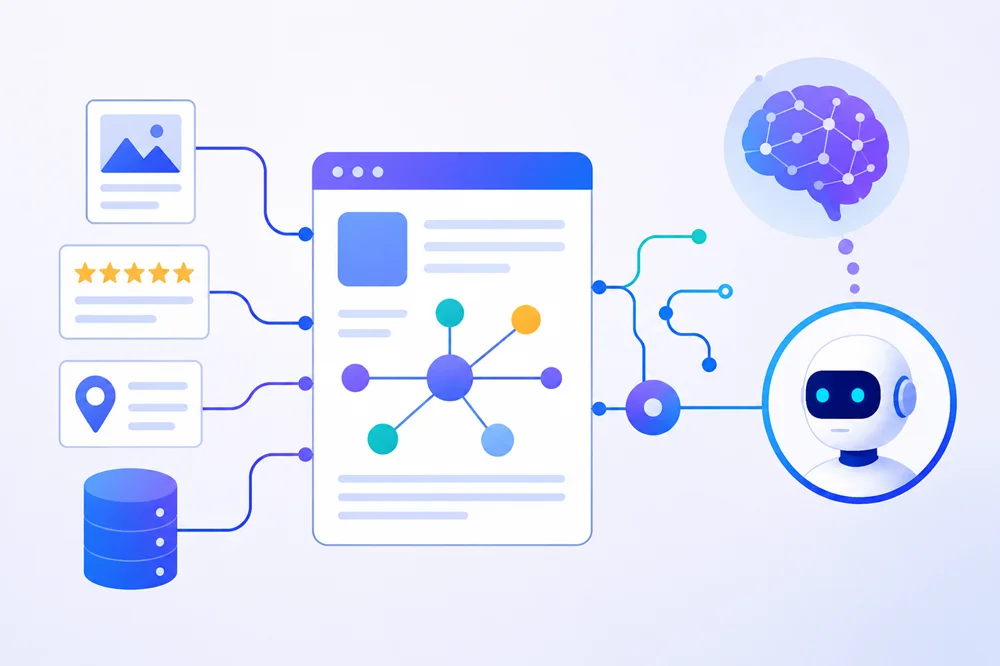
JSON-LD has become the preferred structured data format because it is easy for search engines and AI crawlers to parse.
Benefits include:
Cleaner implementation
Better AI readability
Easier maintenance
Strong Google support
For ecommerce businesses, properly implemented Product schema can significantly improve click-through rates by displaying rich information such as pricing, ratings, and availability.
To dive deeper into this, read this guide on how to optimize content for AI search.
Entity Building Strategy: A Step-by-Step Approach
Building a strong entity requires consistency across technical SEO, content strategy, and external authority signals.
1. Audit Your Existing Entity Signals
Ask:
Do you have an Organization schema?
Are you represented in trusted databases?
Is your brand information consistent everywhere?
2. Implement Complete Schema Markup
Include:
Organization Schema
Person Schema
SameAs Properties
Local Business Markup
3. Create Entity-Rich Content
Focus on:
Consistent brand references
Industry relationships
Topic clusters
Semantic relevance
4. Build External Entity Connections
Earn mentions from:
Industry publications
Trusted directories
Authority websites
Relevant knowledge sources
5. Monitor and Improve
Track:
AI citations
Schema validity
Entity mentions
Knowledge graph growth
The Entity Page Model
Forward-thinking brands are increasingly creating dedicated entity pages and knowledge hubs.
Research suggests that structured entity-focused content improves AI answer accuracy and strengthens topical authority. For a better understanding, read this guide on how GEO will change SEO in India in 2026.
Why Entity SEO Matters for AI Visibility in 2026
The numbers tell the story.
Key Statistics Every Brand Should Know
92% of enterprise brands are failing to achieve AI visibility—their content is invisible to LLMs.
34% of B2B SaaS companies actively block AI crawlers via robots.txt, removing themselves from AI consideration sets.
58.5% of US Google searches now end without a click (zero-click), making AI citations more valuable than ever.
Millions of users increasingly rely on generative AI for search and research.
These shifts mean that being cited by AI systems may soon become as valuable as ranking on page one.
Additional research shows that websites combining structured data with well-organized content experience substantially higher AI citation rates and stronger user engagement.
The Competitive Opportunity
Most businesses are still optimizing primarily for traditional search.
This creates an opportunity for early adopters.
The gap between "technically valid" SEO and "AI-ready" SEO is where future market leaders are being built. For marketers to excel, they must understand how Google AI Overviews will impact SEO strategies in the coming times.
Scale Your AI Visibility With Bestow
Entity SEO is no longer a future strategy. It's becoming the foundation of digital visibility in an AI-first world.
As AI search engines continue to evolve, brands that establish strong entity signals today will be the ones cited, recommended, and discovered tomorrow.
At Bestow, we help businesses move beyond traditional SEO through entity-first optimization, structured data implementation, GEO strategies, and AI search visibility frameworks designed for ChatGPT, Gemini, Perplexity, and Google AI search.
If you're ready to make your brand visible where search is headed next, now is the time to build your entity foundation.
Connect with us
FAQs
Entity SEO is the practice of optimizing your online presence so search engines and AI systems recognize your brand, people, products, and services as distinct entities. It relies on structured data, knowledge graphs, and consistent digital signals.
Entity SEO helps AI systems confidently identify and verify your brand. This increases the likelihood of being cited in AI-generated answers across ChatGPT, Gemini, Perplexity, and Google AI Overviews.
Businesses can implement entity SEO through schema markup, knowledge graph optimization, consistent brand information, authority-building content, and strategic entity relationships across the web.
AI search engines increasingly prioritize entities over keywords when generating answers. Brands without strong entity signals risk becoming invisible in AI-driven search experiences.
Traditional SEO focuses primarily on keywords and backlinks. Entity SEO focuses on establishing a machine-readable identity that AI systems can understand, verify, and cite.
Yes. Proper schema implementation helps AI systems understand your brand, products, authors, and content relationships, improving discoverability and citation potential.
Yes. Entity SEO is one of the core pillars of Generative Engine Optimization (GEO). Strong entities make it easier for AI search engines to recognize, trust, and reference your brand in generated answers.
Categories
Recent Blogs
Send us a message
We'd love to hear from you
Let's build a plateform that works for you busines and the advertisers who trust it.
Talk to Our Expert